Overview of International Climate Policy and REDD+ Mechanism
The presentation by Josep A. Gar provides insights into international climate policy frameworks, focusing on the development and implementation of the REDD+ mechanism. It discusses strategies for reducing emissions from deforestation and forest degradation, emphasizing the importance of forest conservation, sustainable management, and enhancing carbon stocks. The document highlights the various phases of REDD+, including readiness, strategy implementation, and performance-based credits, while addressing stakeholder engagement and the necessary environmental safeguards for effective governance.

Download Presentation

Please find below an Image/Link to download the presentation.
The content on the website is provided AS IS for your information and personal use only. It may not be sold, licensed, or shared on other websites without obtaining consent from the author.If you encounter any issues during the download, it is possible that the publisher has removed the file from their server.
You are allowed to download the files provided on this website for personal or commercial use, subject to the condition that they are used lawfully. All files are the property of their respective owners.
The content on the website is provided AS IS for your information and personal use only. It may not be sold, licensed, or shared on other websites without obtaining consent from the author.
E N D
Presentation Transcript
Overview of the international climate policy & finance framework and the building of the REDD+ mechanism Josep A. Gar Africa Advisor, UN-REDD Programme UNDP - Environment & Energy Unit United Nations Office at Nairobi, Kenya. E-mail: josep.gari@undp.org Africa workshop on strengthening transparency and accountability in REDD+ Lusaka, ZAMBIA | 24-26 March 2012
File:UNFCCC Logo.svg Framework agreement No targets No mechanisms ? targets (Annex I) 3 mechanisms (CDM et al.) 2005-2012 (extended ?) targets (Annex I + others) ? Kyoto mechanisms ? Others ? climate finance (GCF)
REDD+ Reducing Emissions from Deforestation and Forest Degradation The " + " includes conservation of forests, Sustainable Forest Management, and the enhancement of Ccrbon stocks an international environmental finance mechanism of national- level scope under discussion (UNFCCC negotiations), but formally retained to compensate countries for demonstrated efforts in reducing deforestation & forest degradation in their territories (i.e. environmental performance) due attention to social & environmental safeguards required (i.e. governance performance)
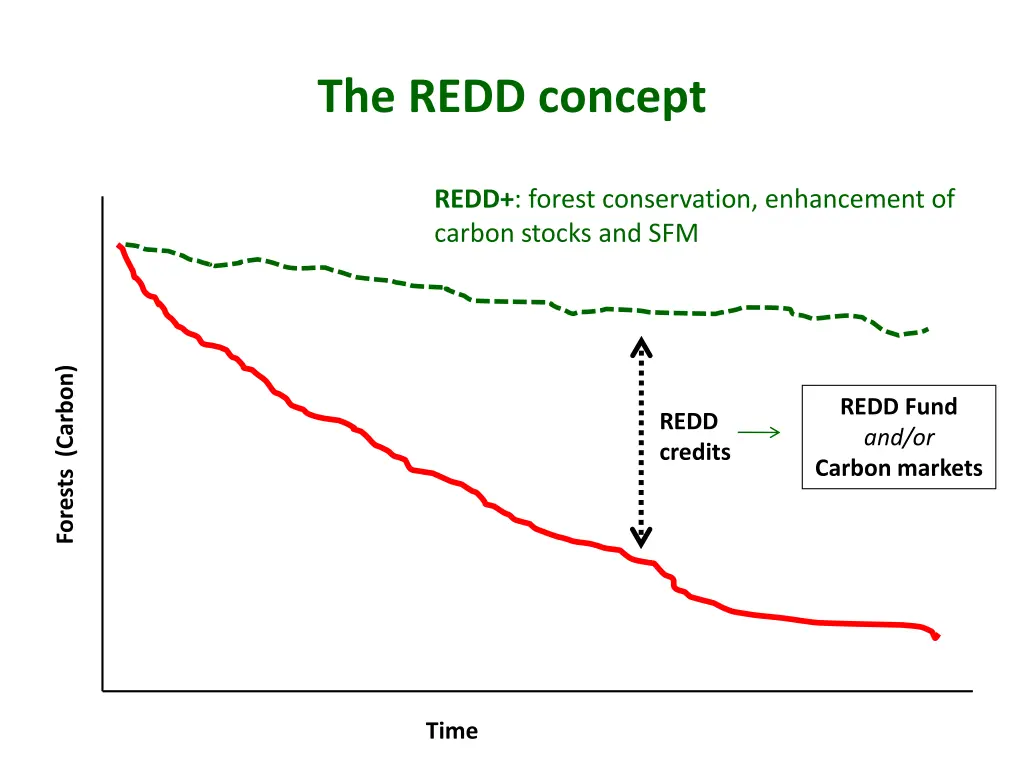
The REDD concept REDD+: forest conservation, enhancement of carbon stocks and SFM Forests (Carbon) REDD Fund and/or Carbon markets REDD credits Time
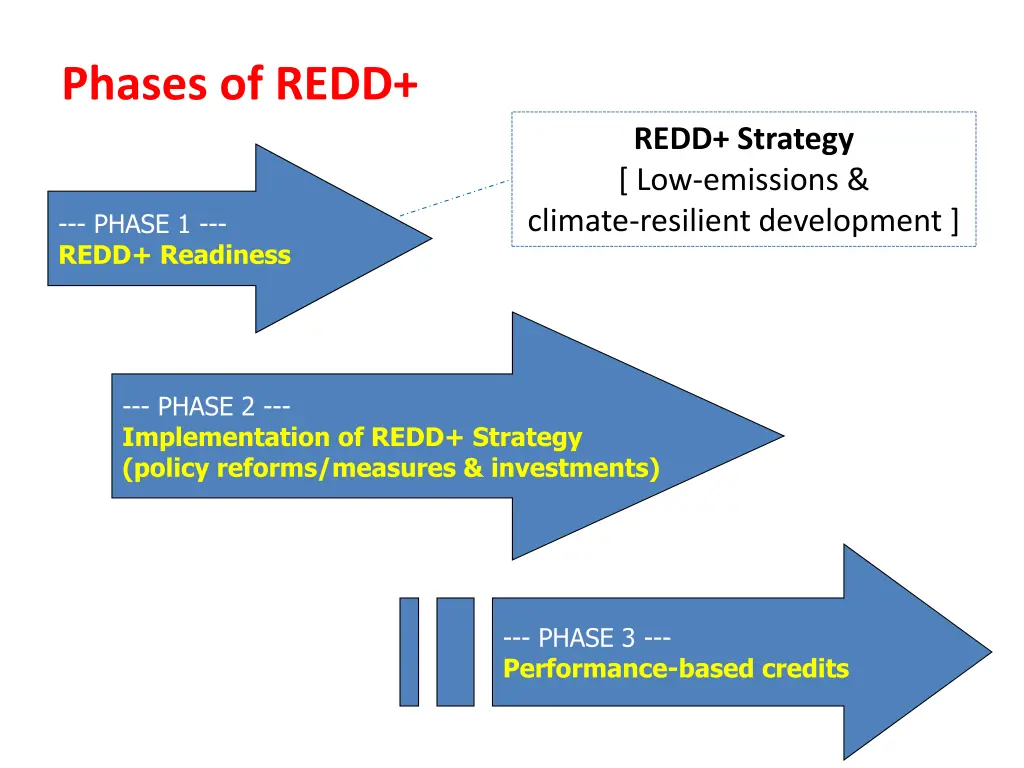
Phases of REDD+ REDD+ Strategy [ Low-emissions & climate-resilient development ] --- PHASE 1 --- REDD+ Readiness --- PHASE 2 --- Implementation of REDD+ Strategy (policy reforms/measures & investments) --- PHASE 3 --- Performance-based credits
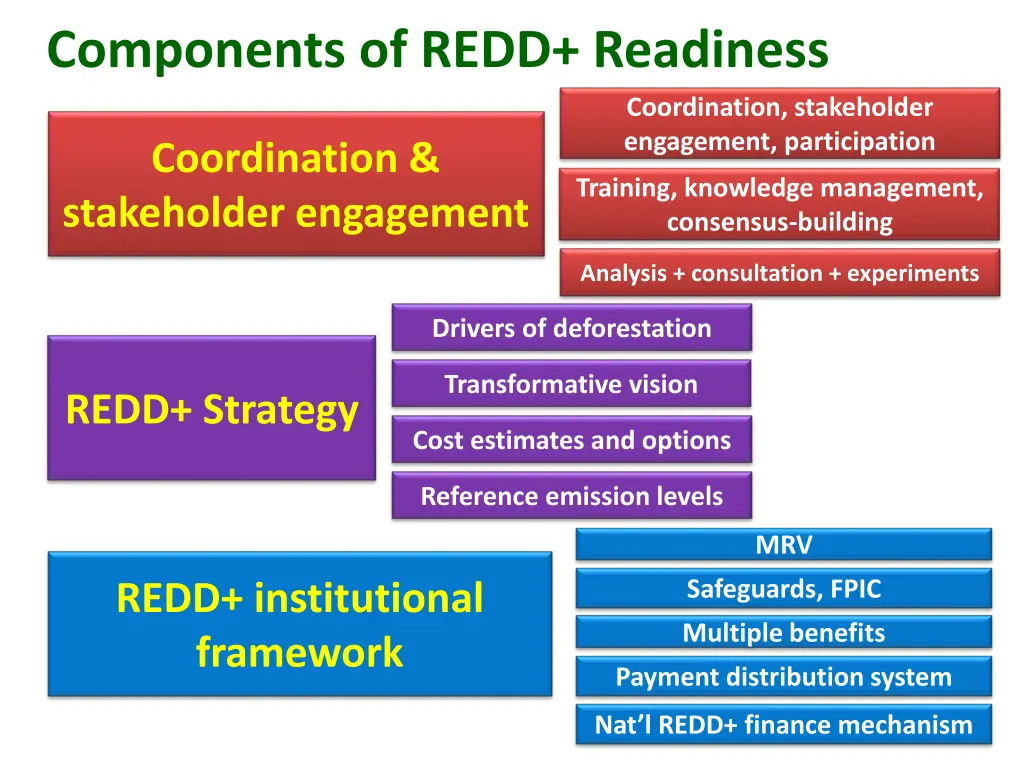
Components of REDD+ Readiness Coordination, stakeholder engagement, participation Coordination & stakeholder engagement Training, knowledge management, consensus-building Analysis + consultation + experiments Drivers of deforestation Transformative vision REDD+ Strategy Cost estimates and options Reference emission levels MRV Safeguards, FPIC REDD+ institutional framework Multiple benefits Payment distribution system Nat l REDD+ finance mechanism
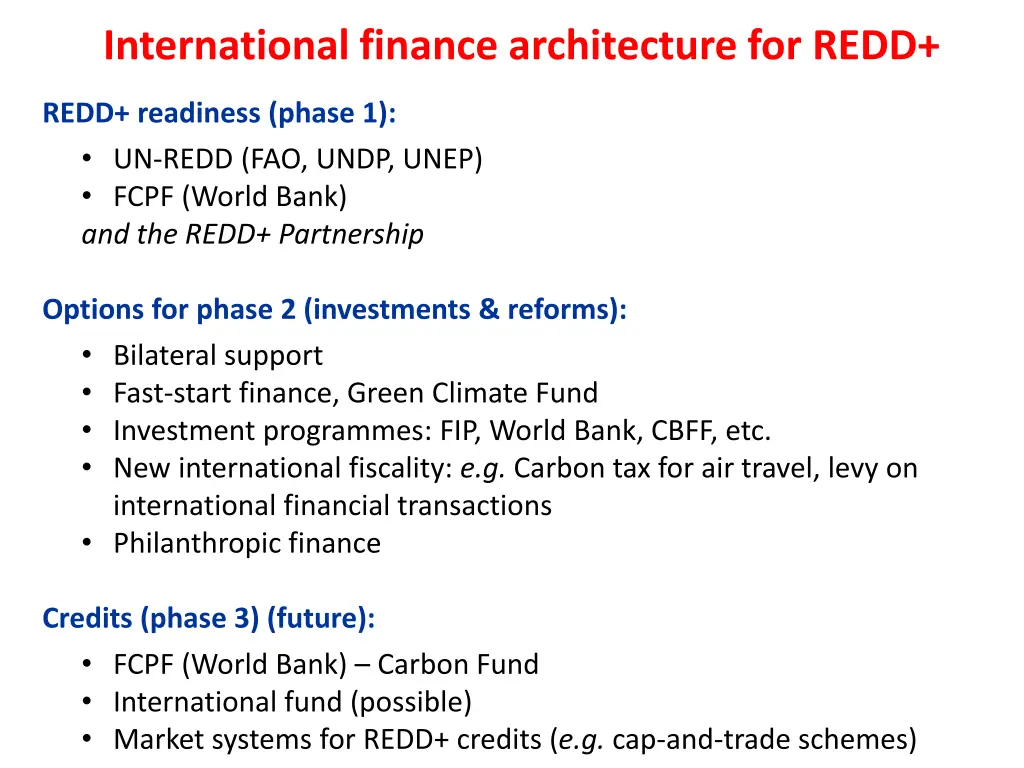
International finance architecture for REDD+ REDD+ readiness (phase 1): UN-REDD (FAO, UNDP, UNEP) FCPF (World Bank) and the REDD+ Partnership Options for phase 2 (investments & reforms): Bilateral support Fast-start finance, Green Climate Fund Investment programmes: FIP, World Bank, CBFF, etc. New international fiscality: e.g. Carbon tax for air travel, levy on international financial transactions Philanthropic finance Credits (phase 3) (future): FCPF (World Bank) Carbon Fund International fund (possible) Market systems for REDD+ credits (e.g. cap-and-trade schemes)
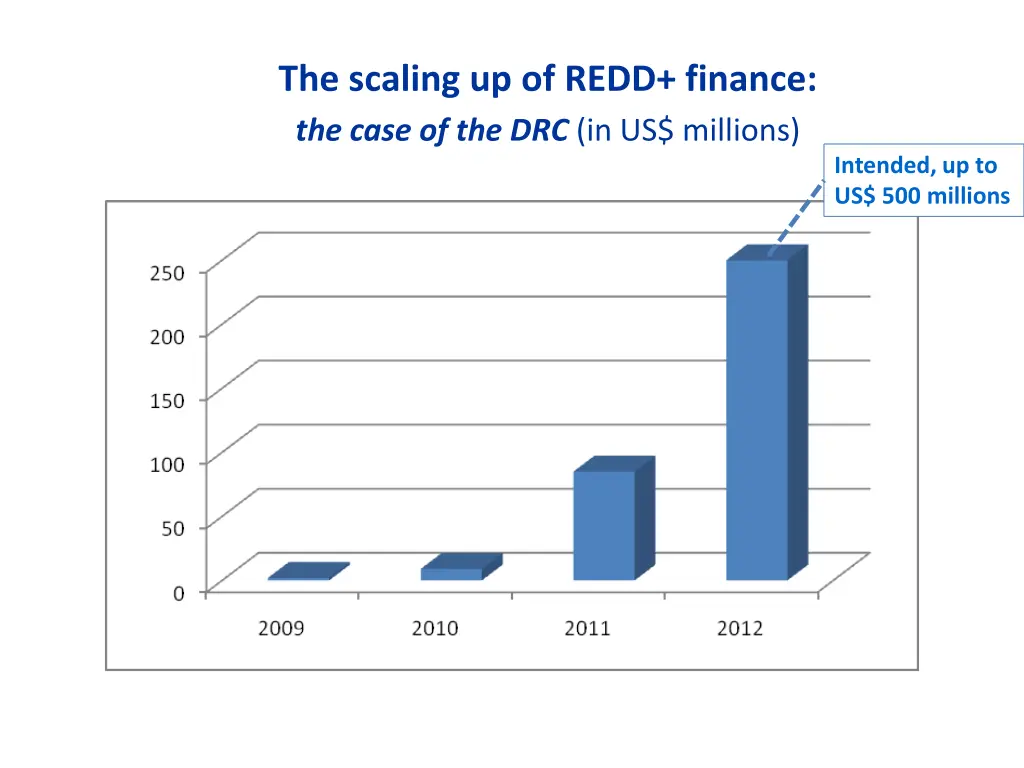
The scaling up of REDD+ finance: the case of the DRC (in US$ millions) Intended, up to US$ 500 millions
REDD+ and climate finance Fast-start climate finance (Copenhagen climate agreements, 2009): US$ 30 billion, new and additional , for mitigation & adaptation in developing countries, 2010-2012. Climate finance targets (Copenhagen and Cancun climate agreements): US$ 100 billion by year for climate affairs and for transforming economies and societies, by 2020. Green Climate Fund: major vehicle for climate finance, endorsed by UNFCCC negotiations, under final design Climate finance available for: Transformational policies and strategies, readiness (phase 1) Investments and reforms (phase 2) Performance payments (phase 3)
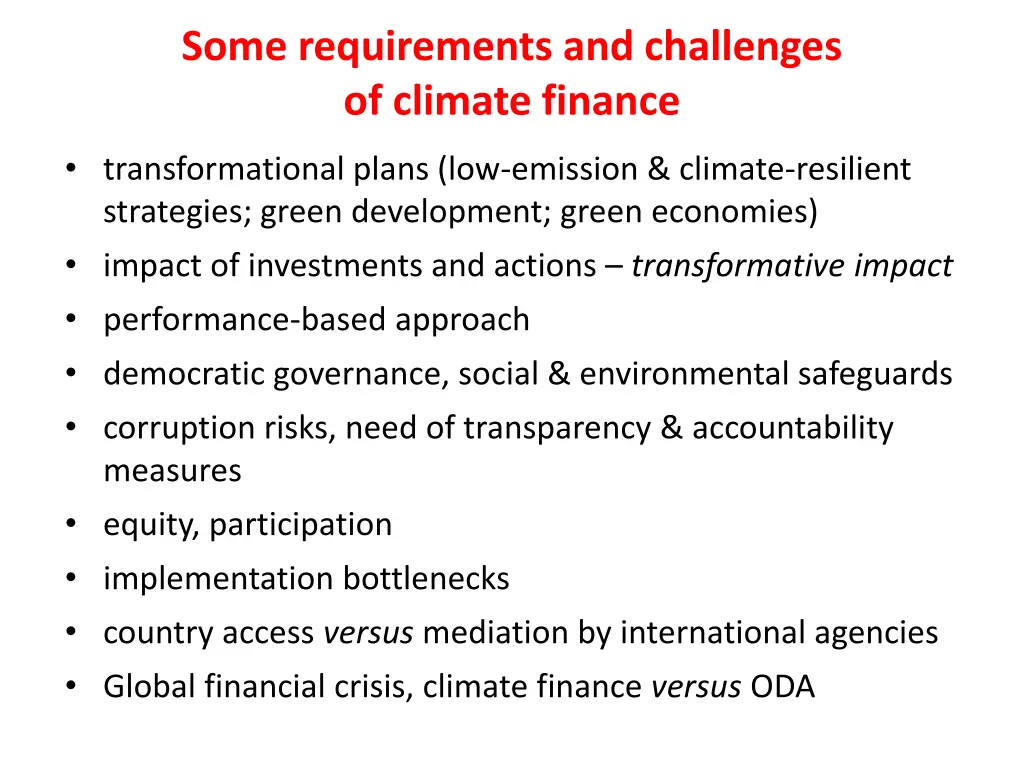
Some requirements and challenges of climate finance transformational plans (low-emission & climate-resilient strategies; green development; green economies) impact of investments and actions transformative impact performance-based approach democratic governance, social & environmental safeguards corruption risks, need of transparency & accountability measures equity, participation implementation bottlenecks country access versus mediation by international agencies Global financial crisis, climate finance versus ODA