Overview of Supported Employment Demonstration 2017
Supported Employment Demonstration (SED) 2017 by Westat for Social Security Administration. Focus on employment services integrated with behavioral health for individuals with mental health impairments to gain and sustain employment. Target population criteria, intervention services, and competitive employment rates discussed.

Download Presentation

Please find below an Image/Link to download the presentation.
The content on the website is provided AS IS for your information and personal use only. It may not be sold, licensed, or shared on other websites without obtaining consent from the author.If you encounter any issues during the download, it is possible that the publisher has removed the file from their server.
You are allowed to download the files provided on this website for personal or commercial use, subject to the condition that they are used lawfully. All files are the property of their respective owners.
The content on the website is provided AS IS for your information and personal use only. It may not be sold, licensed, or shared on other websites without obtaining consent from the author.
E N D
Presentation Transcript
Overview of the Supported Employment Demonstration (SED) 2017 Conducted by Westat under contract to the Social Security Administration
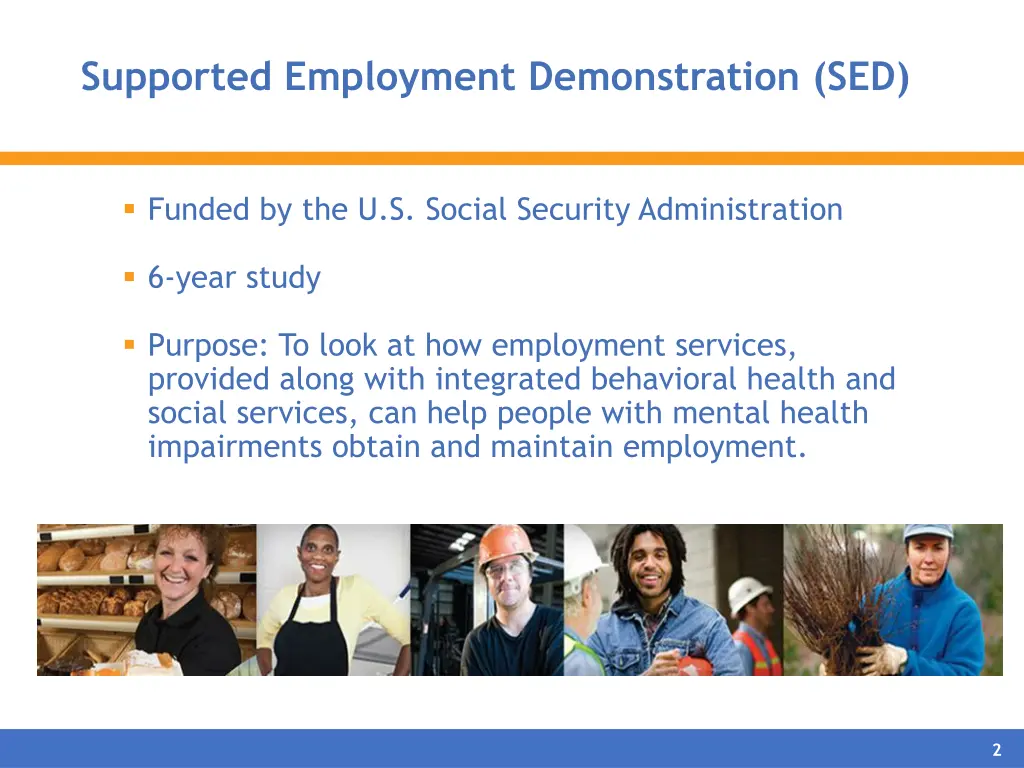
Supported Employment Demonstration (SED) Funded by the U.S. Social Security Administration 6-year study Purpose: To look at how employment services, provided along with integrated behavioral health and social services, can help people with mental health impairments obtain and maintain employment. 2
Target Population Social Security disability applicants: Age 18 to 50 Lives in a study site catchment area Does not live in a residential/custodial facility Alleges or has a documented mental illness Denied at the initial level of the application process in past 30-60 days (no technical denials) Expresses a desire to work 3
Intervention Package Services Individual Placement and Support (IPS) employment services Behavioral health services (as needed) Medication management services (as needed) Other Supports Funding for Individual Work-Related Expenses Care Manager services and funding to remove barriers to working Funding for treatment-approved behavioral health services 4
Competitive Employment Rates in 28 Randomized Controlled Trials of IPS We selected the IPS model for the SED because it is evidence-based and well researched. In 28 randomized controlled trials (RCTs) assessing the effectiveness of IPS for people with serious mental illness, all but one in mainland China found competitive employment outcomes significantly favoring IPS. In the 28 studies (N=6,468), 55% of IPS participants achieved competitive employment compared to 25% of control participants receiving other vocational services (https://ipsworks.org/index.php/evidence-for-ips/). Evidence for the effectiveness of IPS continues to grow, starting with early studies in the US in the 1990s and 2000s and extending to replication studies throughout Europe, Canada, Australia, Hong Kong and Japan. IPS has expanded steadily, spreading to new clinical populations and more mental health settings in the US and worldwide. 5
Competitive Employment Rates in 28 Randomized Controlled Trials of IPS (p2) Recent [RCTs] of IPS include six trials for people with common mental disorders, two for people with substance use disorders, and one for veterans with spinal cord injuries. Eight of these nine studies showed employment outcomes significantly favoring IPS. Large-scale IPS trials in other populations are in progress, including three for people with substance use disorders [in the US, the UK, and Norway]. Several small, [RCTs] of IPS for people with criminal justice involvement have been completed, with a large-scale US trial [starting in 2021]. Following pilot work, large IPS trials are planned or underway for people with autism spectrum disorder, borderline personality disorder, and chronic pain. For more details, see: Bond GR, Drake RE, Becker DR. An update on randomized controlled trials of evidence-based supported employment. Psychiatric Rehabilitation Journal 2008;31:280-290. 6
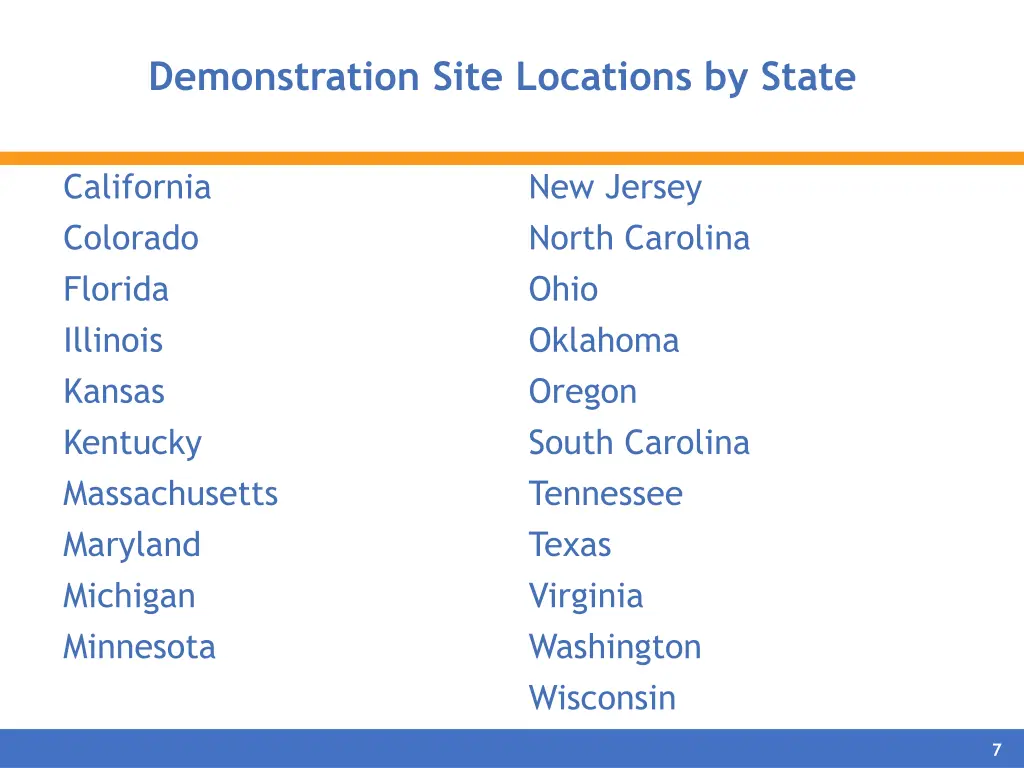
Demonstration Site Locations by State California Colorado Florida Illinois Kansas Kentucky Massachusetts Maryland Michigan Minnesota New Jersey North Carolina Ohio Oklahoma Oregon South Carolina Tennessee Texas Virginia Washington Wisconsin 7
Randomized Controlled Trial Design for SED The SED uses a random assignment design to assign 2,960 participants to one of two treatment groups (Full Services or Basic Services) or to a control group (Usual Services). For 36 months, participants receives services based on their assignment. These services include systematic medication management, health care management and care-coordination services, and long-term employment services under the IPS model. 8
Randomized Controlled Trial Design (p2) Our key considerations for a randomization scheme included level of predictability and outcome balance across the three study arms: Full-Service, Basic-Service, and Usual service groups. The randomization design we use yields a balanced allocation with assignment of the same number of enrollees to each study arm at each site. We seek to achieve the same number of enrollees in each study arm for four subgroups: SSI applicants age 18 to 34; SSI applicants age 35 to 50; SSDI applicants age 18 to 34; and SSDI applicants age 35 to 50. 9
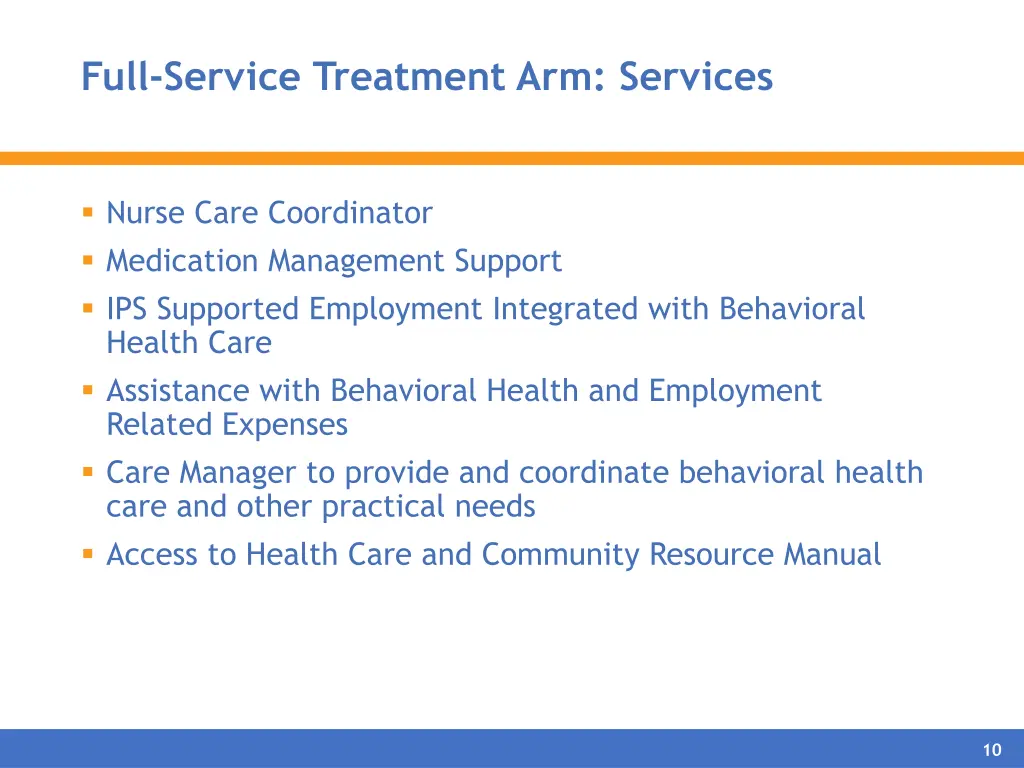
Full-Service Treatment Arm: Services Nurse Care Coordinator Medication Management Support IPS Supported Employment Integrated with Behavioral Health Care Assistance with Behavioral Health and Employment Related Expenses Care Manager to provide and coordinate behavioral health care and other practical needs Access to Health Care and Community Resource Manual 10
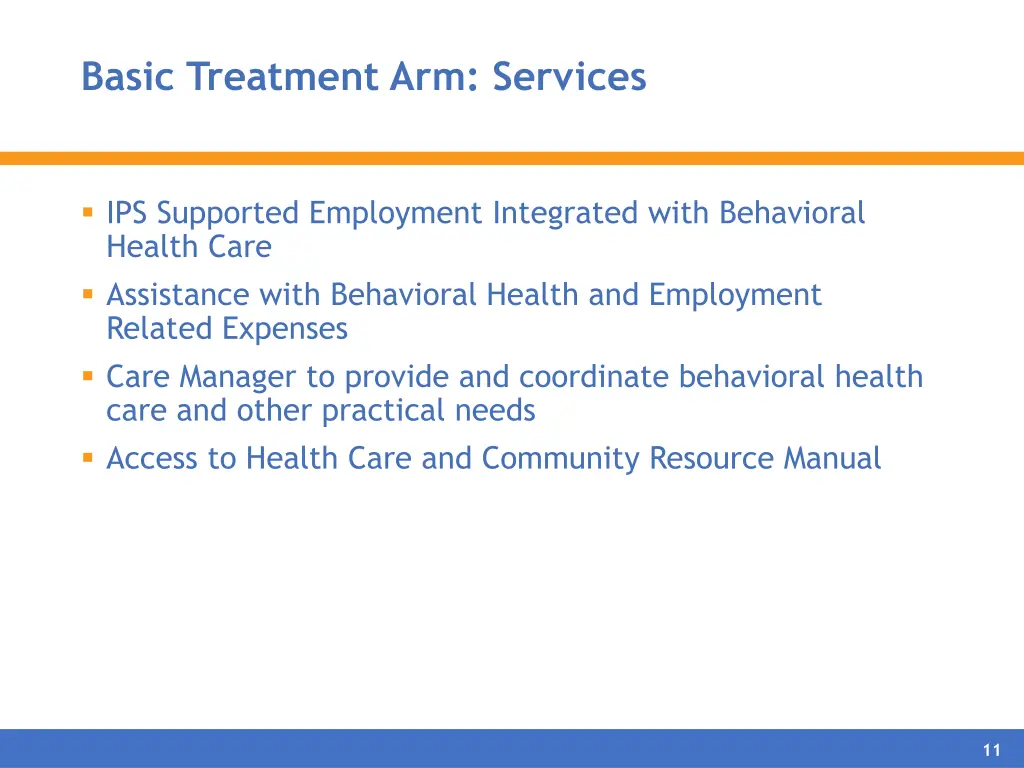
Basic Treatment Arm: Services IPS Supported Employment Integrated with Behavioral Health Care Assistance with Behavioral Health and Employment Related Expenses Care Manager to provide and coordinate behavioral health care and other practical needs Access to Health Care and Community Resource Manual 11
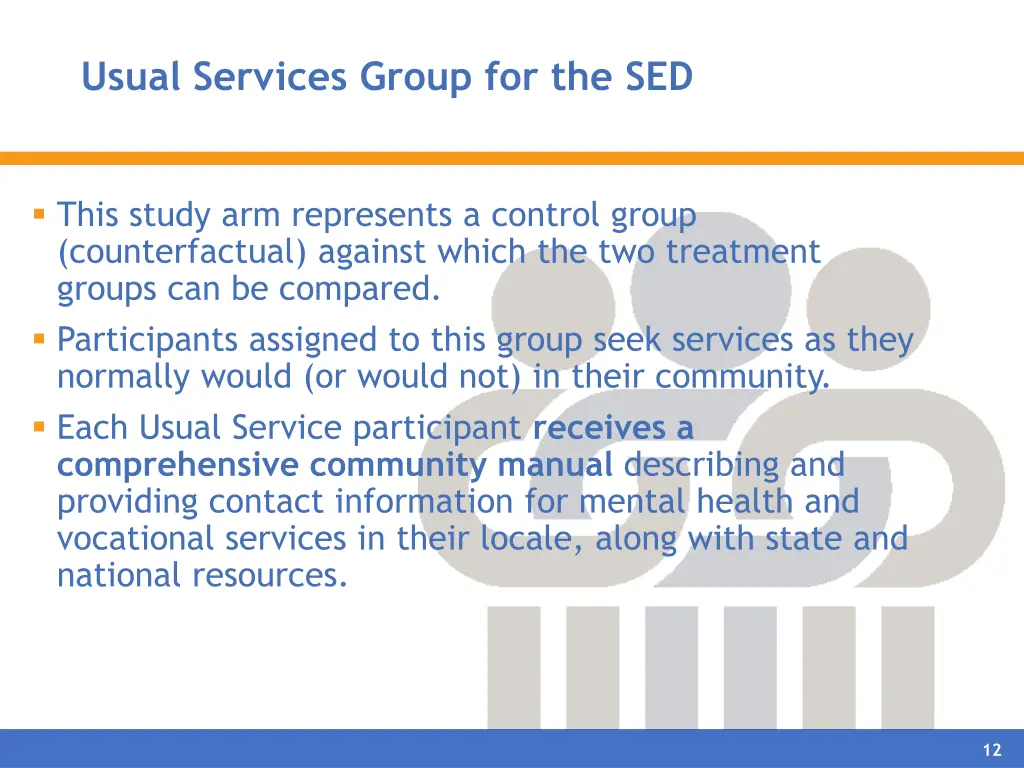
Usual Services Group for the SED This study arm represents a control group (counterfactual) against which the two treatment groups can be compared. Participants assigned to this group seek services as they normally would (or would not) in their community. Each Usual Service participant receives a comprehensive community manual describing and providing contact information for mental health and vocational services in their locale, along with state and national resources. 12
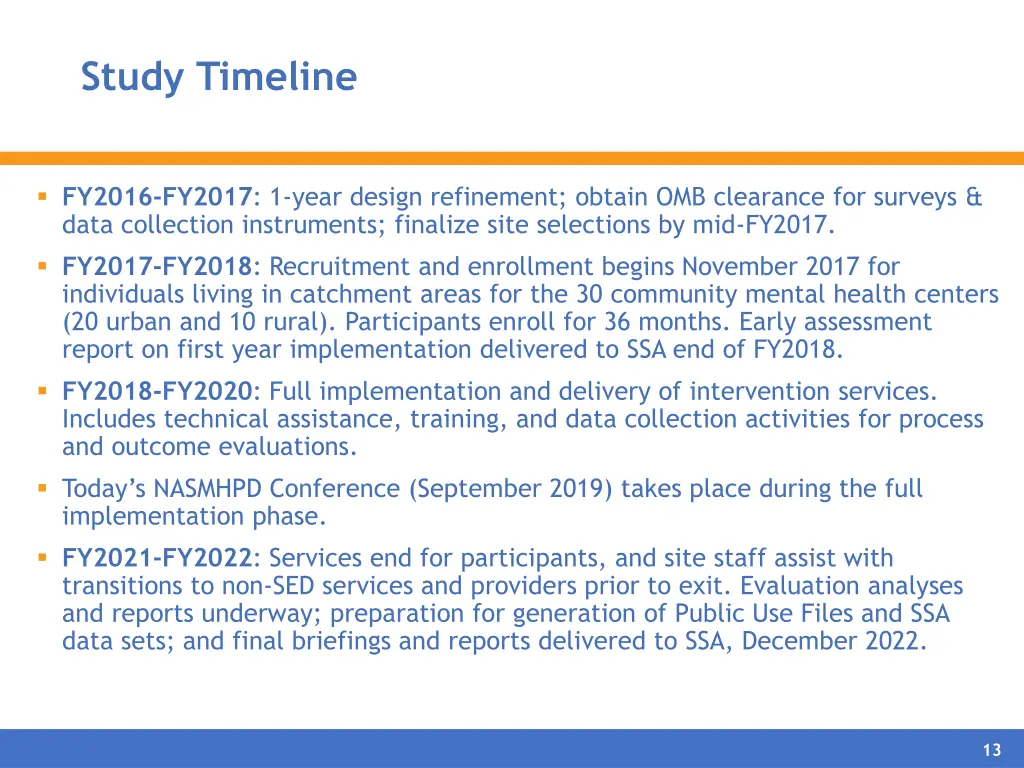
Study Timeline FY2016-FY2017: 1-year design refinement; obtain OMB clearance for surveys & data collection instruments; finalize site selections by mid-FY2017. FY2017-FY2018: Recruitment and enrollment begins November 2017 for individuals living in catchment areas for the 30 community mental health centers (20 urban and 10 rural). Participants enroll for 36 months. Early assessment report on first year implementation delivered to SSA end of FY2018. FY2018-FY2020: Full implementation and delivery of intervention services. Includes technical assistance, training, and data collection activities for process and outcome evaluations. Today s NASMHPD Conference (September 2019) takes place during the full implementation phase. FY2021-FY2022: Services end for participants, and site staff assist with transitions to non-SED services and providers prior to exit. Evaluation analyses and reports underway; preparation for generation of Public Use Files and SSA data sets; and final briefings and reports delivered to SSA, December 2022. 13
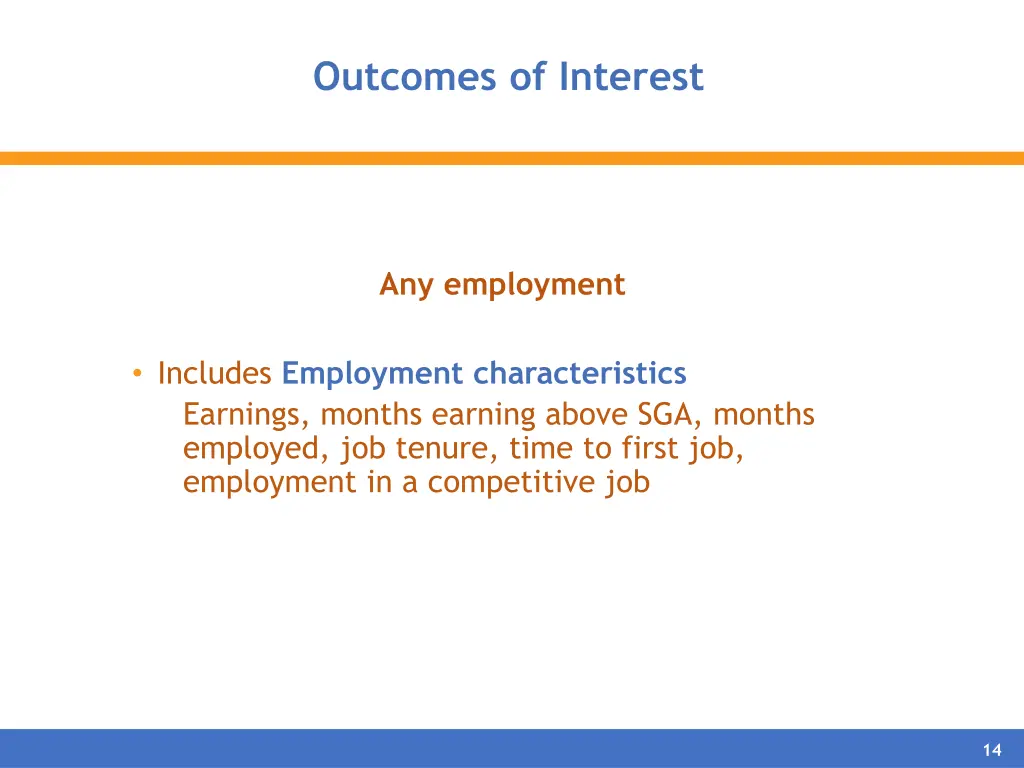
Outcomes of Interest Any employment Includes Employment characteristics Earnings, months earning above SGA, months employed, job tenure, time to first job, employment in a competitive job 14
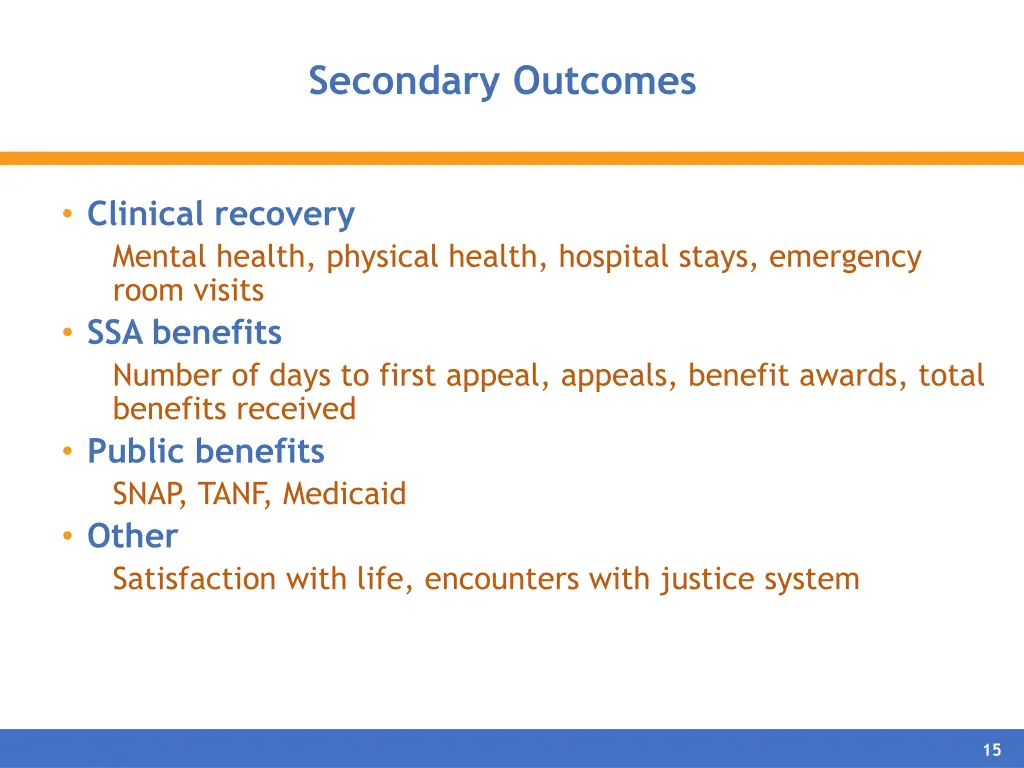
Secondary Outcomes Clinical recovery Mental health, physical health, hospital stays, emergency room visits SSA benefits Number of days to first appeal, appeals, benefit awards, total benefits received Public benefits SNAP, TANF, Medicaid Other Satisfaction with life, encounters with justice system 15
Study Contacts* Co-Principal Investigator, Evaluation Lead William Frey, Ph.D. (301) 610-5198 williamfrey@westat.com Co-Principal Investigator, Implementation Lead Robert Drake, Ph.D. (603) 678-4528 robertdrake@westat.com Operations Director Jarnee Riley, M.S. (240) 453-2724 jarneeriley@westat.com *Please contact Ms. Riley for updated personnel roster. 16