Learn about creating a quality core curriculum assessment plan, including defining assessment, the instructional cycle, common issues, and the 5 steps in the assessment process. Discover the importance of student learning outcomes and how to effectively collect, analyze, and utilize assessment data for improving student learning and development.
Please find below an Image/Link to download the presentation.
The content on the website is provided AS IS for your information and personal use only. It may not be sold, licensed, or shared on other websites without obtaining consent from the author. If you encounter any issues during the download, it is possible that the publisher has removed the file from their server.
You are allowed to download the files provided on this website for personal or commercial use, subject to the condition that they are used lawfully. All files are the property of their respective owners.
The content on the website is provided AS IS for your information and personal use only. It may not be sold, licensed, or shared on other websites without obtaining consent from the author.
E N D
Presentation Transcript
Note: Because of slide animation, this ppt is intended to be viewed as a slide show. While viewing the ppt, it may be helpful to obtain a sample Core Assessment Plan (pdf) & an Assessment Plan Template (in Word). These are both available under Forms: Assessment Plan Templates
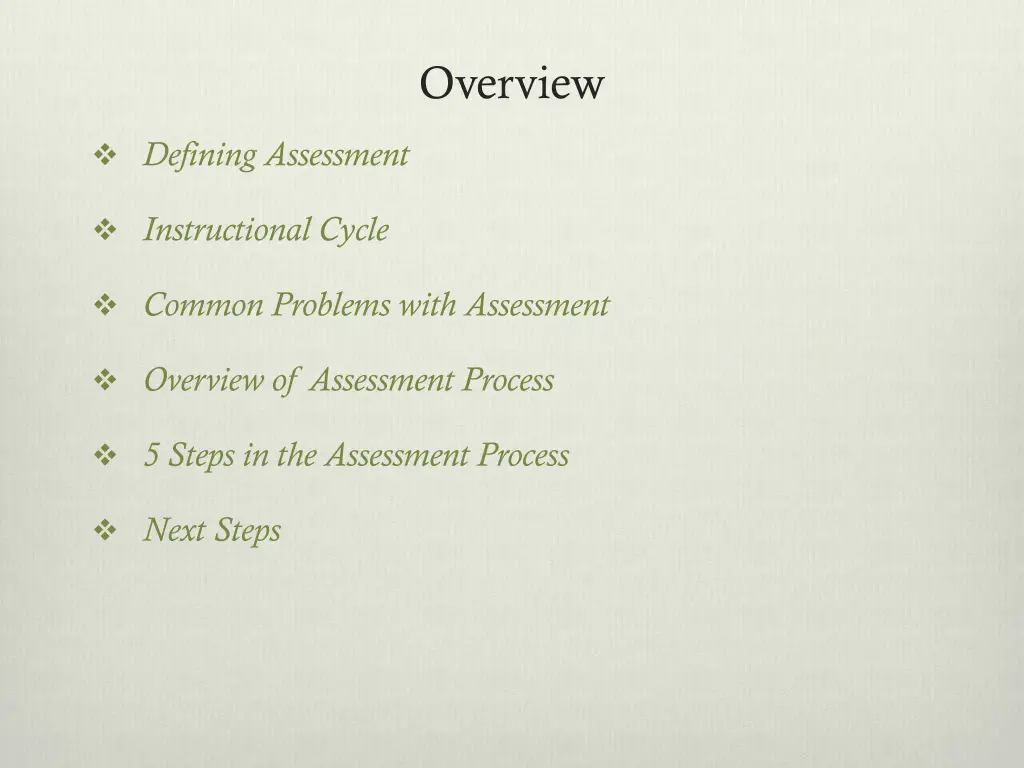
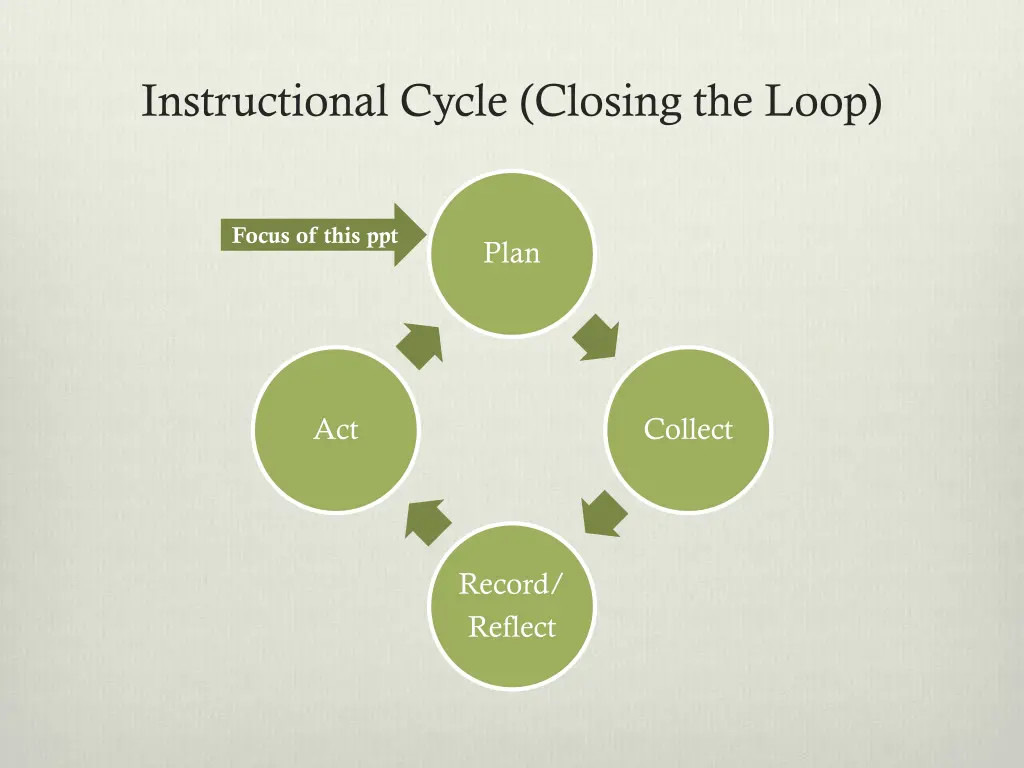
Overview Defining Assessment Instructional Cycle Common Problems with Assessment Overview of Assessment Process 5 Steps in the Assessment Process Next Steps
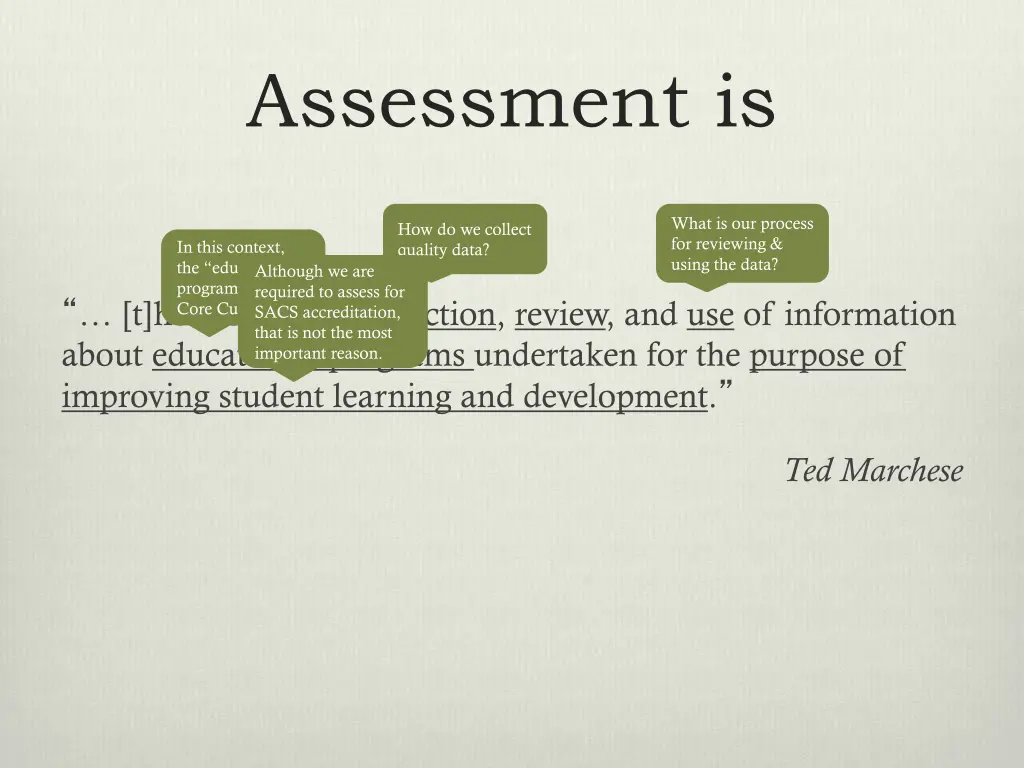
Assessment is What is our process for reviewing & using the data? How do we collect quality data? In this context, the educational program is the Core Curriculum. Although we are required to assess for SACS accreditation, that is not the most important reason. [t]he systematic collection, review, and use of information about educational programs undertaken for the purpose of improving student learning and development. Ted Marchese
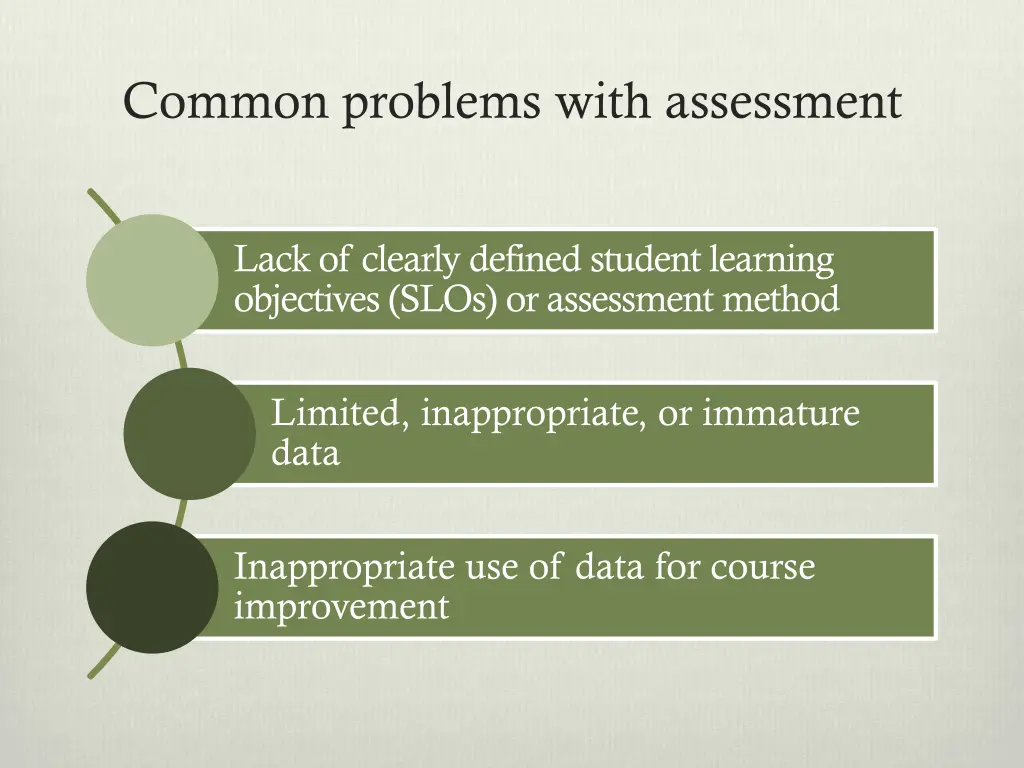
Common problems with assessment Lack of clearly defined student learning objectives (SLOs) or assessment method Limited, inappropriate, or immature data Inappropriate use of data for course improvement
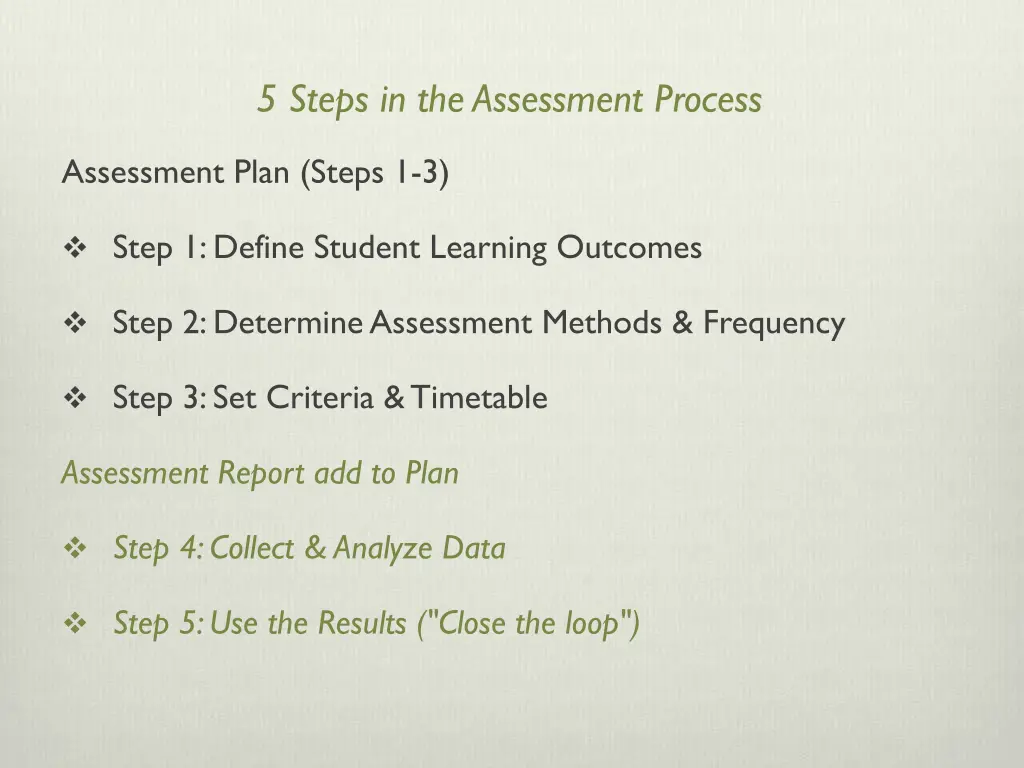
5 Steps in the Assessment Process Assessment Plan (Steps 1-3) Step 1: Define Student Learning Outcomes Step 2: Determine Assessment Methods & Frequency Step 3: Set Criteria & Timetable Assessment Report add to Plan Step 4: Collect & Analyze Data Step 5: Use the Results ("Close the loop")
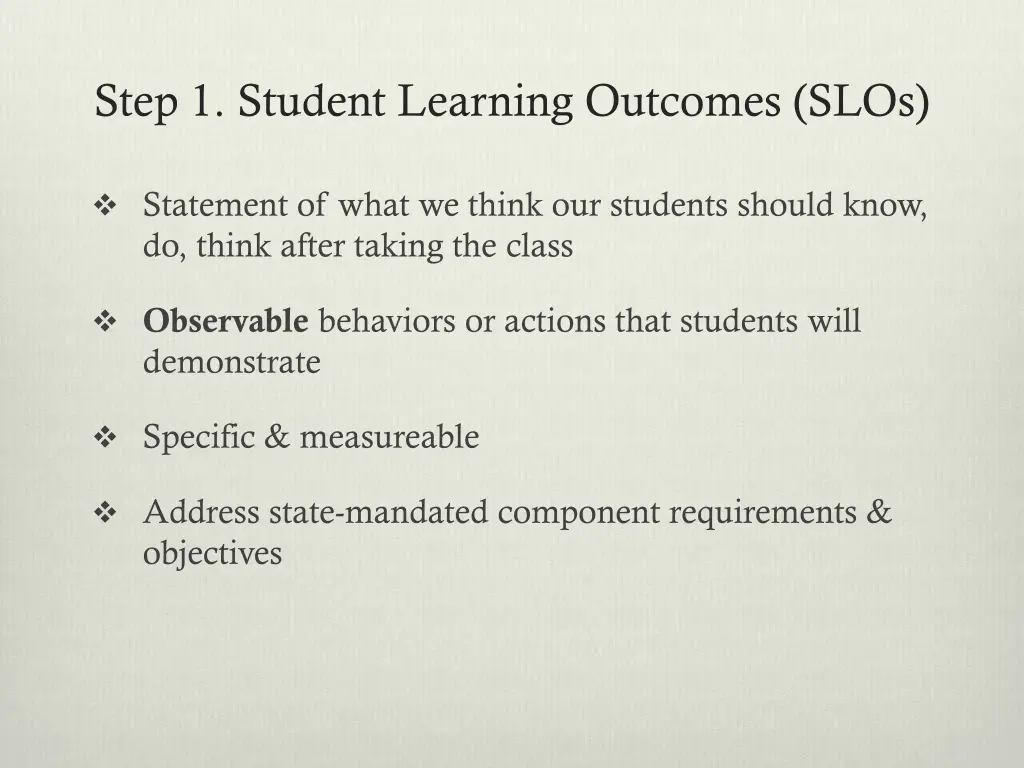
Step 1. Student Learning Outcomes (SLOs) Statement of what we think our students should know, do, think after taking the class Observable behaviors or actions that students will demonstrate Specific & measureable Address state-mandated component requirements & objectives
Step 2. Quality Assessment Methods . . . Must be related to the outcome being measured. For example, it is not possible to measure oral communication with embedded test questions. Are techniques used to directlymeasure student attainment of stated learning outcomes. Describe the data source (i.e., embedded exam questions, rubrics).
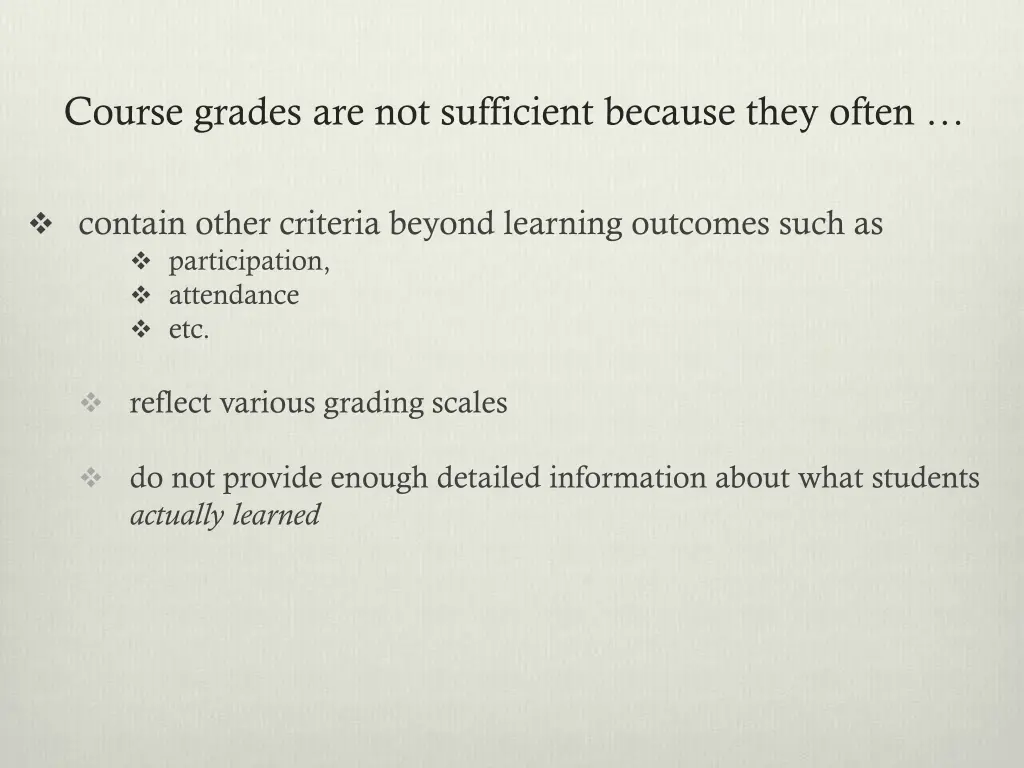
Course grades are not sufficient because they often contain other criteria beyond learning outcomes such as participation, attendance etc. reflect various grading scales do not provide enough detailed information about what students actuallylearned
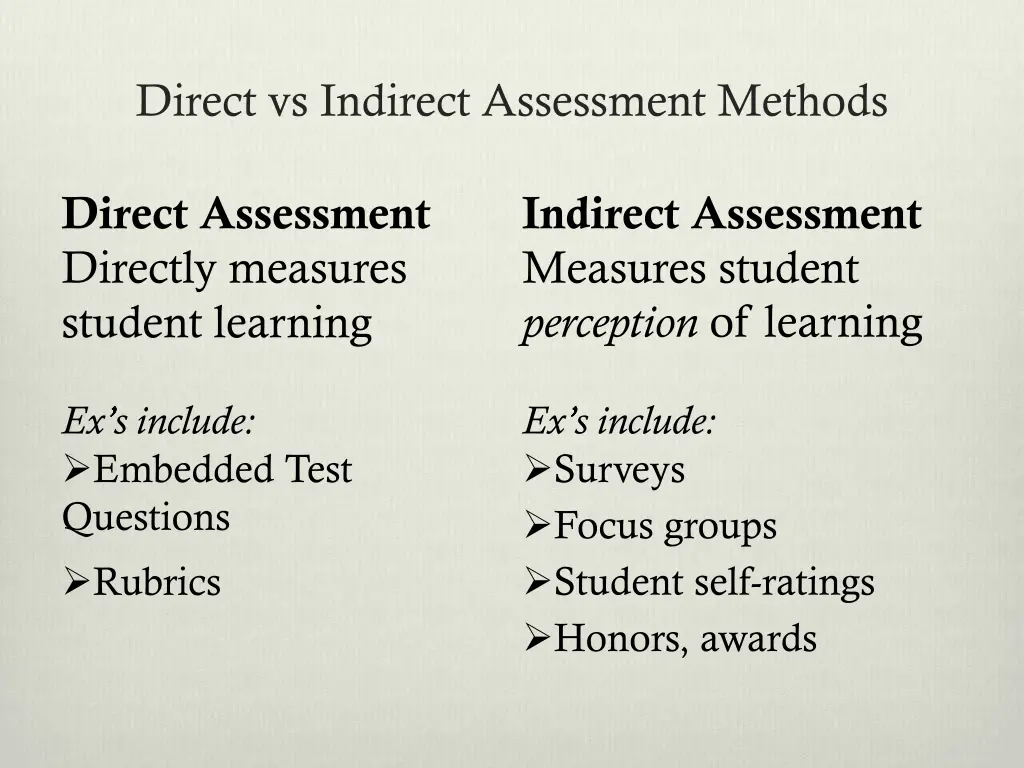
Direct vs Indirect Assessment Methods Direct Assessment Directly measures student learning Indirect Assessment Measures student perception of learning Ex s include: Embedded Test Questions Rubrics Ex s include: Surveys Focus groups Student self-ratings Honors, awards
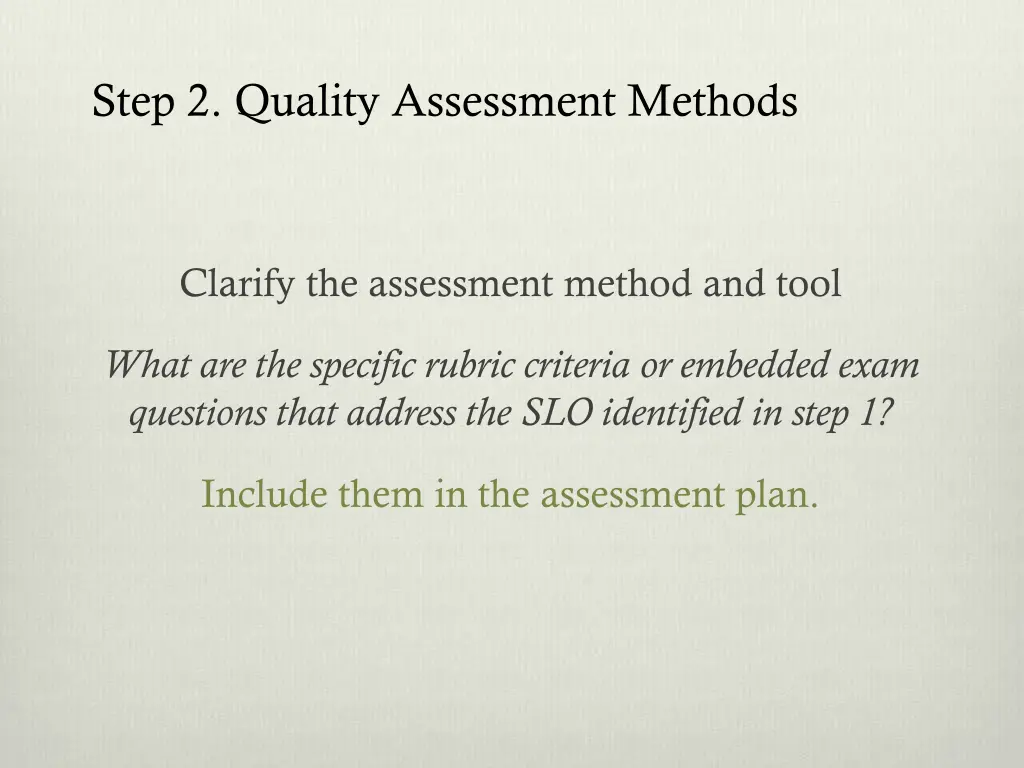
Step 2. Quality Assessment Methods Clarify the assessment method and tool What are the specific rubric criteria or embedded exam questions that address the SLO identified in step 1? Include them in the assessment plan.
Quality Assessment Requires Consistency & Evenness Across Sections There should be faculty consensus across course sections regarding the specific SLOs, as well as the embedded exam questions &/or rubric criteria. Only with consistency & evenness in the course and assessment method is it possible to evaluate SLOs across the entire course.
Step 2. Quality Assessment Methods & Frequency Which sections will be assessed & how often? (EX: Odd numbered sections assessed annually) NOTE: Every core course must be assessed at least once per year but not necessarily every section of every course. Departments are encouraged to assess courses only in the regular semesters and avoid summer assessment.
Step 3. Set Criteria & Timetable Criteria What is the benchmark for student success? Specific & measureable = useful Timetable Set a schedule for data collection. Fall only? Spring only? Both Fall & Spring terms?
Assessment is about . . . A continuous hunt for ways to improve student learning. The journey, not a destination.
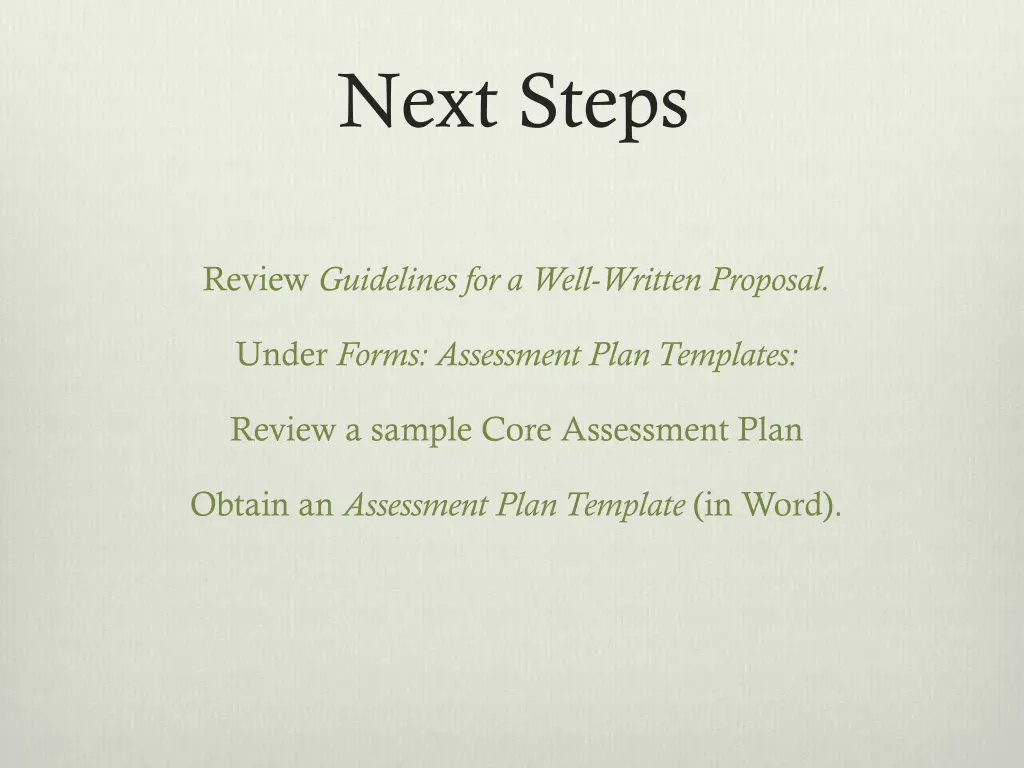
Next Steps Review Guidelines for a Well-Written Proposal. Under Forms: Assessment Plan Templates: Review a sample Core Assessment Plan Obtain an Assessment Plan Template (in Word).