Understanding Lipid Classification and Structure
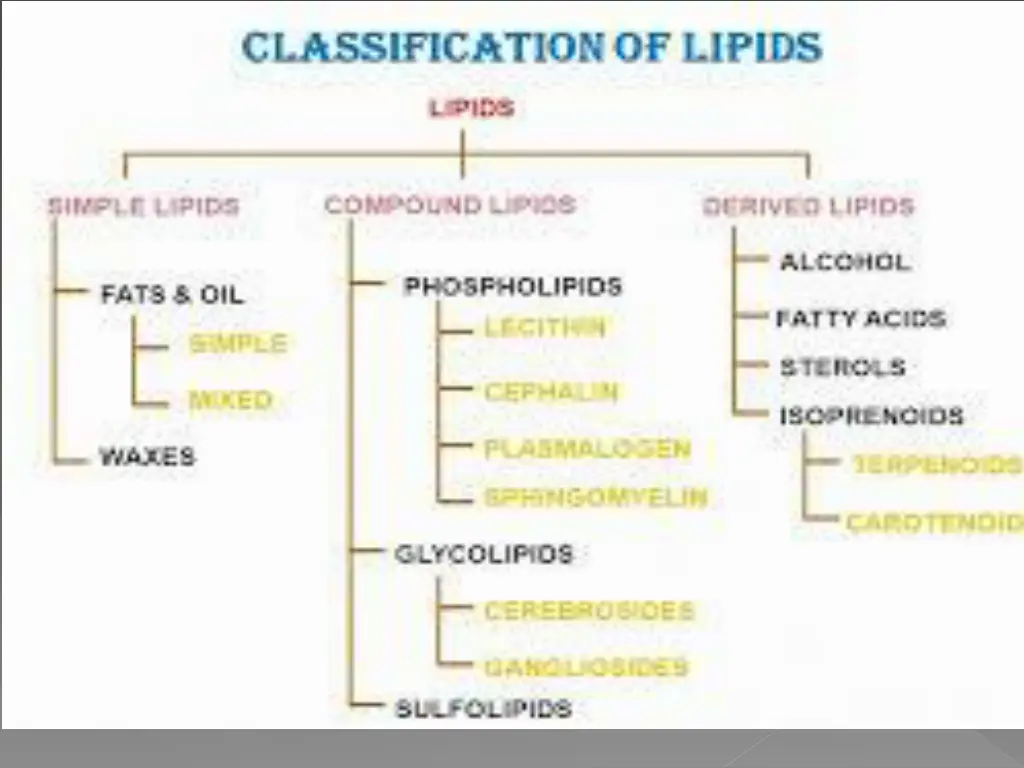
Explore the classification of lipids into simple, compound, and derived categories, understanding their structure, properties, and examples such as triglycerides, phospholipids, glycolipids, and more. Discover how lipids play essential roles in biological systems.

Download Presentation

Please find below an Image/Link to download the presentation.
The content on the website is provided AS IS for your information and personal use only. It may not be sold, licensed, or shared on other websites without obtaining consent from the author. If you encounter any issues during the download, it is possible that the publisher has removed the file from their server.
You are allowed to download the files provided on this website for personal or commercial use, subject to the condition that they are used lawfully. All files are the property of their respective owners.
The content on the website is provided AS IS for your information and personal use only. It may not be sold, licensed, or shared on other websites without obtaining consent from the author.
E N D
Presentation Transcript
What are lipids ? These organic compounds are nonpolar molecules, which are soluble only in Non-polar solvents and insoluble in water because water is polar molecules
Simple lipids (FA +Alcohol) Esters of fatty acids with glycerol. Mainly of three types : 1) triglycerides (FA+alcohol) 2) Fats and oils () 3) waxes (FA + cetyl alcohol)
Compound lipids Mainly classified into 2 types I )Phospholipids (FA+alcohol + phosphate + N- base ) 1) Glycerophoshpolipids : (FA+ glycerol + N-base+ phosphate ) example : lecithin, cephalin 2) Sphingophospholipids : (FA+ sphingosine + N-base + phosphate) Example : Sphingomyelin
II) Glycolipids (FA+Sphingosine + carbohydrate+ N-base) Example cerebrosides , gangliosides
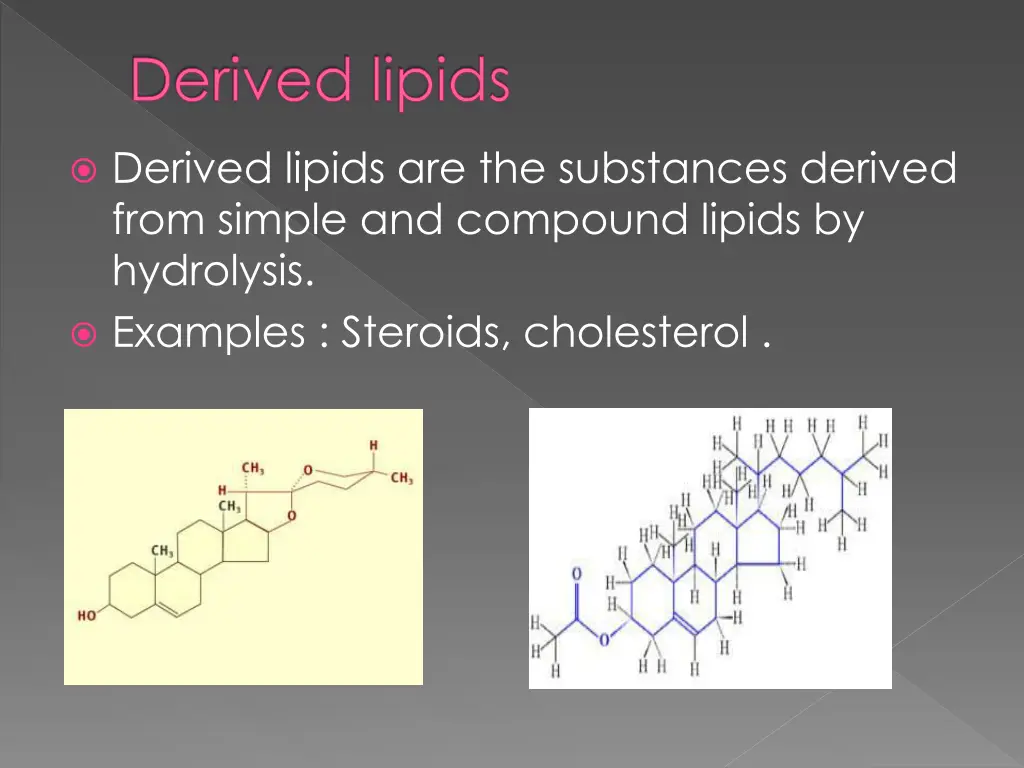
Derived lipids Derived lipids are the substances derived from simple and compound lipids by hydrolysis. Examples : Steroids, cholesterol .