Leveraging Finance Intermediaries for Sanitation Sector Growth
USAID's Water, Sanitation, and Hygiene Finance 2 (WASH-FIN 2) aims to mobilize $375 million by 2027 for climate-resilient water and sanitation services in Kenya, India, and Ghana. The project focuses on strengthening governance, improving service provider performance, and expanding partnerships. Tec
1 views • 12 slides
Webinar #04: Utilities Driving Citywide Inclusive Sanitation in Zambia
Webinar #04 focuses on the role of commercial utilities in promoting citywide inclusive sanitation in Zambia. The event aims to facilitate knowledge exchange among water operators in Africa to enhance urban sanitation access. The agenda includes case studies from Luapula and Lukanga, guided discussi
2 views • 56 slides

Progress on Global Monitoring of Safely Managed Sanitation Services
Presentation on the progress of safely managed sanitation services globally, highlighting the off-track status towards meeting SDG targets. It covers the distribution of on-site and sewered sanitation, wastewater treatment, and challenges in safe management. The project includes pilots in Bangladesh
17 views • 18 slides
Workers Advisers Office: Addressing Sexual Harassment Complaints
The Workers Advisers Office, a branch of the Ministry of Labour, provides free advice and assistance to workers on compensation claims and prohibited action complaints, including those related to sexual harassment. They handle compensation claims for injuries and diseases, as well as mental disorder
5 views • 45 slides
Smart and Targeted Sanitation Subsidies for Inclusive Market Systems
This research explores the effectiveness of targeted sanitation subsidies in improving access to sanitation facilities for poor households in Cambodia and Ethiopia. It addresses the challenges of sustainability and inclusivity in market-based sanitation approaches, highlighting the controversy surro
2 views • 21 slides
Challenges and Solutions in Urban Sanitation Infrastructure Planning
Sanitation plays a vital role in promoting public health by preventing human exposure to waste hazards and ensuring proper sewage disposal. This presentation covers key aspects of sanitation, including the generation, collection, treatment, and disposal of sewage in urban areas. It highlights the ga
4 views • 15 slides
Integrating Sanitation and Handwashing into PEPFAR Programming
Why Wash matters for PLHIV due to the significant impact of diarrhea on individuals living with HIV/AIDS, affecting absorption of antiretrovirals and nutrients, causing burden on caregivers, and reducing quality of life. Critical WASH behaviors like safe feces disposal, water treatment, and handwash
4 views • 13 slides

Post-COVID-19 Operational Guide for PCR Inc.
The operational guide outlines safety protocols for PCR Inc. post-COVID-19, emphasizing a 50% capacity limit, presence of a certified food manager on-site, adherence to social distancing guidelines, frequent sanitation of high-touch surfaces, and mandatory mask-wearing. Employees are required to wea
6 views • 7 slides
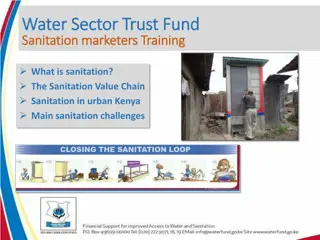
Sanitation Challenges and Solutions in Kenya
Sanitation in Kenya faces significant challenges, with only about 31% of households having overall access. The Water Supply and Sanitation Collaborative Council defines sanitation as the management of human excreta, wastewater, and solid waste, along with hygiene promotion. The Sanitation Value Chai
0 views • 9 slides
New Urban Sanitation Technologies and Systems in Kenya
Explore the comprehensive training sessions and innovative technologies introduced for water sector reform in Kenya, focusing on urban sanitation systems. Gain insights into wastewater management, functional groups, sanitation value chain, and user interface, essential for sustainable sanitation sol
18 views • 25 slides
Rural Sanitation and Wastewater Management Practices
Rural sanitation plays a crucial role in maintaining sanitary conditions in villages and small towns, where more than 70% of the population resides in India. The implementation of proper waste disposal facilities, such as pit privies and eco-sanitation systems, is essential to prevent the spread of
1 views • 61 slides
Overview of GLAAS and TrackFin in Relation to SDGs & Monitoring Initiatives
GLAAS and TrackFin play crucial roles in aligning with SDGs, particularly focusing on water and sanitation targets. The 2030 Agenda emphasizes the importance of sustainable development through various global indicators and targets, such as access to basic services, universal health coverage, and mit
3 views • 22 slides
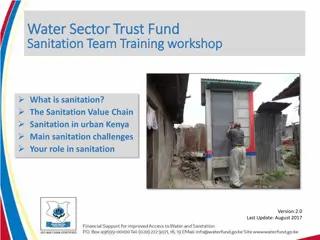
Sanitation: Promoting Health Through Proper Waste Management
Sanitation is essential for promoting health by preventing human contact with hazardous wastes and ensuring proper waste treatment and disposal. Hygienic practices, treatment facilities, and personal hygiene all play vital roles in maintaining sanitation. The World Health Organization defines sanita
5 views • 26 slides
Karnataka Rural Water Supply & Sanitation Project Overview
The Karnataka Rural Water Supply & Sanitation Project, assisted by the World Bank, focuses on enhancing water supply, sanitation facilities, and community empowerment in rural areas. The project involves components like water quality tests, household toilets, and women empowerment activities. Throug
0 views • 19 slides
Urban Poor Sanitation Design Technical Drawings and Planning View
Ensuring basic sanitation for urban poor, this project involves designing and planning technical drawings with a focus on upscaling basic sanitation facilities. The content provides insight into the context of the session, potential DTF layouts, considerations during layout preparation, and baseline
3 views • 17 slides
Decent Housing Project for Improved Water Supply and Sustainable Sanitation
Towards enhancing urban water supply, sustainable sanitation, and energy use for decent housing, the project led by Jacob Kihila and Patrick Willems aims to address challenges such as solid waste management, water access, and space utilization. With a focus on research and societal engagement, the p
6 views • 12 slides
Debate on Shared Sanitation: Improved or Not?
The discussion revolves around the classification of shared sanitation as improved or unimproved. WHO and UNICEF have a classification system where shared sanitation is considered unimproved due to concerns about cleanliness and accessibility. A proposed policy change by JMP seeks to include shared
3 views • 22 slides
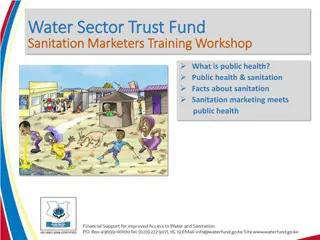
Importance of Sanitation in Public Health Promotion
Public health interventions focus on improving health and quality of life by preventing and treating diseases, promoting healthy behaviors, and addressing sanitation issues. Lack of clean water and proper sanitation can lead to the spread of various diseases, highlighting the crucial link between sa
3 views • 8 slides
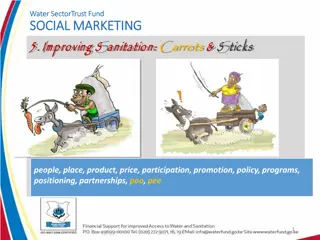
SafiSan Toilets Initiative for Improved Sanitation Practices
The SafiSan toilets initiative focuses on promoting improved sanitation practices through a combination of incentives and regulations. The project emphasizes access to adequate sanitation as a human right and highlights the benefits of utilizing SafiSan toilets, which are affordable, user-friendly,
1 views • 10 slides
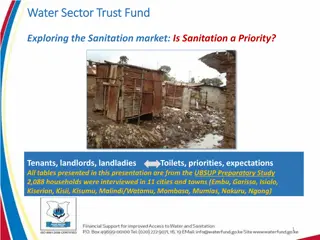
Sanitation Priorities and Investments: Insights from UBSUP Preparatory Study
The presentation discusses sanitation issues and priorities based on a survey of 2,088 households in 11 cities and towns. It highlights problems related to sanitation, residents' opinions on the need for improvement, types of toilets used, and investment plans in sanitation infrastructure.
3 views • 12 slides
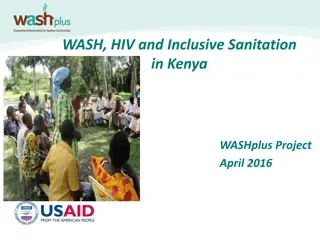
Innovative Approaches to WASH and Inclusive Sanitation in Kenya
The WASHplus Project in Kenya has introduced innovative approaches to WASH and inclusive sanitation, focusing on Small Doable Actions (SDAs), Capacity Building, Menstrual Hygiene Management, Sanitation Uptake through CLTSplus, and promoting Inclusive Sanitation. Through training, collaboration with
4 views • 16 slides
Mainstreaming inclusive sanitation into community-led total sanitation in Kenya
Approximately 19,500 Kenyans, including 17,100 children under 5, die from diarrhea annually, with poor WASH practices being a major contributing factor. The Community-Led Total Sanitation (CLTS) approach in Kenya aims to accelerate the uptake of basic sanitation in rural areas but needs to be more i
2 views • 12 slides
Improvement of Governance and Access to Drinking Water and sanitation in the Rural sub-basin of Nirnova
This project focuses on enhancing governance and improving access to drinking water and sanitation in the rural sub-basin of Nirnova in Moldova. It involves decentralized cooperation in the field of water and sanitation, aiming to benefit 30 municipalities, two hydrographic basins, and over 43,000 i
2 views • 10 slides

Key Updates in Workers' Compensation Law
This content covers recent legal developments in workers' compensation law, focusing on undocumented workers' eligibility for benefits and the Exclusive Remedy Doctrine. Key cases such as Moyera v. Quality Pork International and Estate of Teague v. Crossroads Coop are discussed, highlighting signifi
3 views • 43 slides
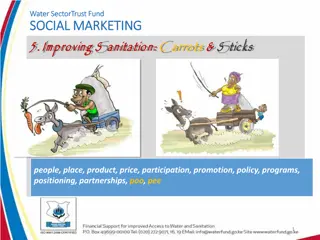
Improving Sanitation with Carrots and Sticks Approach
Encourage proper sanitation practices using a combination of rewards (carrots) and punishments (sticks). Highlight the benefits of SafiSan toilets and the importance of good sanitation. Emphasize the human right to adequate sanitation, disease prevention, and legal obligations for landlords.
3 views • 10 slides
Mainstreaming Inclusive Sanitation in Kenya
Approx. 19,500 Kenyans, including 17,100 children under 5, die yearly due to poor WASH practices. Learn how Kenya is integrating inclusive sanitation into community-led total sanitation initiatives. Understand the importance of making CLTS fully inclusive, addressing the disability situation, and th
4 views • 12 slides
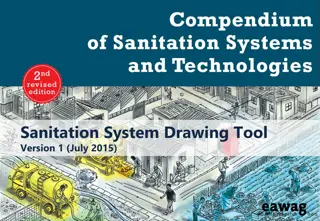
Sanitation System Drawing Tool Version 1 (July 2015)
This content provides information on the Sanitation System Drawing Tool Version 1 released in July 2015. It includes details about nine sanitation system templates and how they can be used to design a sanitation system. Each template represents different technology combinations for designing sanitat
2 views • 16 slides
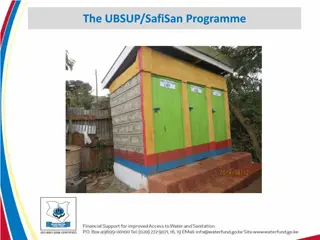
Innovative Sanitation Programme for Urban Poverty Alleviation
The UBSUP/SafiSan Programme aims to upscale basic sanitation for the urban poor in Kenya through sustainable interventions targeting improved living conditions, access to safe water, and proper hygiene practices. The programme involves various initiatives such as providing better toilets, safe water
0 views • 15 slides
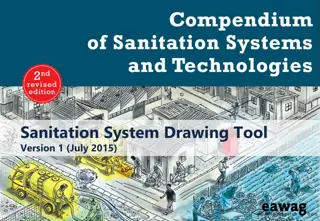
How to Utilize the Sanitation System Drawing Tool
Learn how to effectively use the Sanitation System Drawing Tool Version 1, created in July 2015. This tool allows you to design and modify sanitation systems based on the Compendium of Sanitation Systems and Technologies, by adding, removing, or rearranging elements. You can also print, report, or p
0 views • 16 slides
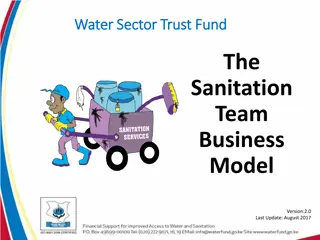
Sanitation Team's Business Model
The Sanitation Team, a group of entrepreneurs providing sanitation services, is crucial in completing the sanitation value chain. They offer emptying, transportation, reuse, and disposal services, contributing significantly to the success of projects like the UBSUP programme. With a focus on custome
3 views • 17 slides
Sanitation Team Business Model Overview
The Sanitation Team, a group of entrepreneurs providing sanitation services, is a key stakeholder in completing the sanitation value chain. They offer emptying, transportation, reuse, disposal services, and more. This model emphasizes their role in various components, customer segments, and value pr
2 views • 11 slides
Sanitation Costs Analysis in Water Sector Reform Trainings
Explore the costs associated with providing sanitation services in the water sector, focusing on operating and capital costs in urban sanitation governance. Learn about factors influencing treatment costs, asset renewals, and investment efficiency. Discover the components of OPEX and CAPEX in networ
3 views • 12 slides
Improving WASH and Inclusive Sanitation in Kenya through Innovative Approaches
Learn about the WASHplus project in Kenya, which focuses on improving Water, Sanitation, and Hygiene practices, including HIV integration, menstrual hygiene management, and inclusive sanitation. Discover how capacity building, small doable actions, and community-led total sanitation have contributed
2 views • 16 slides
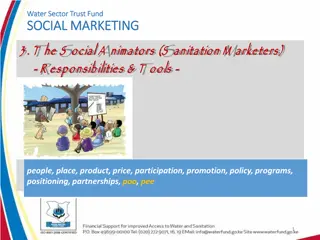
Key Roles and Tools of Social Animators in Sanitation Marketing
Learn about the responsibilities and tools of social animators, also known as sanitation marketers, in promoting improved sanitation practices. They focus on creating demand for SafiSan toilets, promoting good hygiene, and educating communities on the importance of proper sanitation. Key messages in
0 views • 10 slides
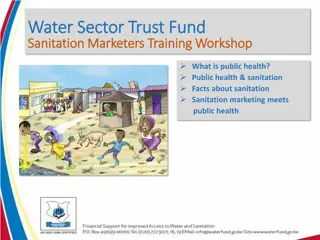
Sanitation Marketing Meets Public Health: Importance and Impact
Explore the vital link between sanitation and public health, as poor sanitation can lead to the spread of diseases. Learn how improving sanitation facilities can significantly benefit communities by promoting a healthier environment and reducing disease prevalence.
2 views • 8 slides
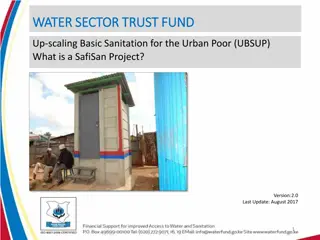
SafiSan Project: Addressing Sanitation Challenges in Kenya
The SafiSan project aims to tackle sanitation challenges in Kenya by addressing issues such as biased government priorities, poor sanitation monitoring, lack of infrastructure, and more. Through initiatives like the Water Sector Trust Fund, efforts are being made to upscale basic sanitation for the
2 views • 21 slides
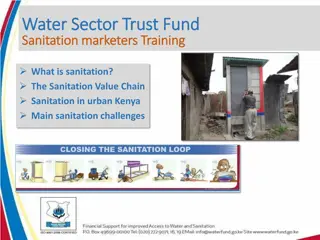
Sanitation: Challenges and Solutions in Urban Kenya
Explore the concept of sanitation, its importance, and challenges faced in urban Kenya. Learn about the sanitation value chain, access to improved toilets, and the efforts made for hygiene promotion and waste management. Discover the role of organizations like the Water Supply and Sanitation Collabo
1 views • 9 slides
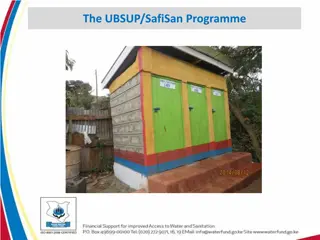
Sustainable Urban Sanitation Programme in Kenya
Learn about the UBSUP/SafiSan Programme and WSTF's sanitation interventions in Kenya from 2009 to 2013. Discover the need for upscaling basic sanitation for the urban poor and the specific objectives of the UBSUP Programme. Explore SafiSan, the post-construction incentive approach used, and the impo
2 views • 15 slides
Water Sector Reform in Kenya: Definitions in Sanitation and Hygiene
This content delves into the water sector reform in Kenya with a focus on sanitation and hygiene definitions. It covers important aspects such as improved sanitation, centralized and decentralized sanitation systems, and key messages regarding the sanitation crisis. The images provide visual insight
0 views • 13 slides

Enhancing Sanitation Awareness: UBSUP Social Marketing Strategies
Discover how UBSUP utilizes social marketing to emphasize the importance of good sanitation, promote proper toilet use, and encourage community participation in improving sanitation facilities. From national to household levels, various interventions and messaging strategies are implemented to trigg
1 views • 13 slides