Exploring Public Libraries and the Public Sphere: Research Insights
Dive into the research surrounding public libraries and their role in the public sphere. Discover common themes, methods, and future research possibilities identified in the field. Explore the changing landscape of public libraries in the digital age and their impact on community building, inclusion/exclusion, and the evolving public sphere.

Download Presentation

Please find below an Image/Link to download the presentation.
The content on the website is provided AS IS for your information and personal use only. It may not be sold, licensed, or shared on other websites without obtaining consent from the author. If you encounter any issues during the download, it is possible that the publisher has removed the file from their server.
You are allowed to download the files provided on this website for personal or commercial use, subject to the condition that they are used lawfully. All files are the property of their respective owners.
The content on the website is provided AS IS for your information and personal use only. It may not be sold, licensed, or shared on other websites without obtaining consent from the author.
E N D
Presentation Transcript
Researching public libraries and Researching public libraries and the public sphere: A mapping of the public sphere: A mapping of questions, methods, theories, questions, methods, theories, and findings and findings LIDA 2018
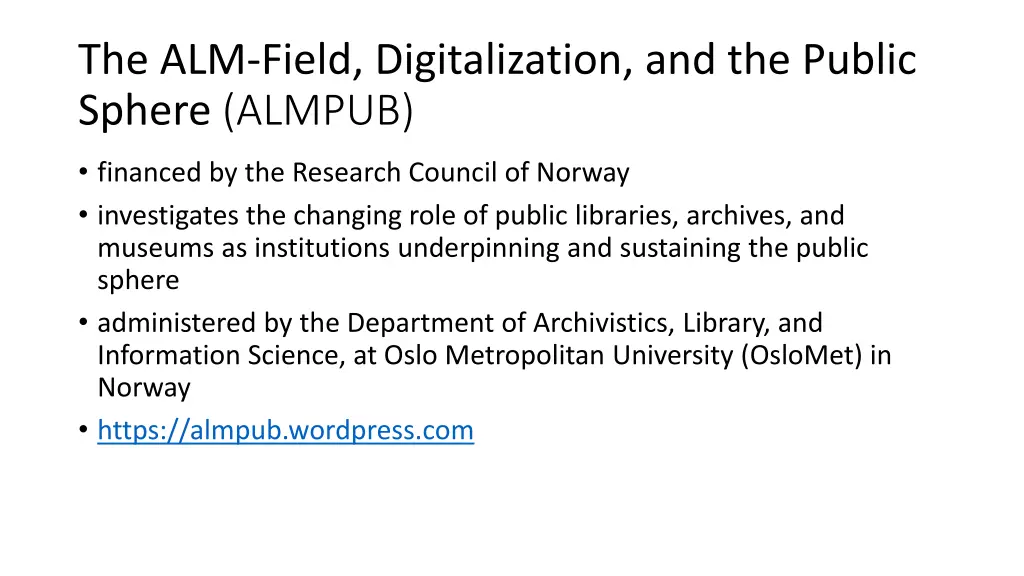
The ALM-Field, Digitalization, and the Public Sphere (ALMPUB) financed by the Research Council of Norway investigates the changing role of public libraries, archives, and museums as institutions underpinning and sustaining the public sphere administered by the Department of Archivistics, Library, and Information Science, at Oslo Metropolitan University (OsloMet) in Norway https://almpub.wordpress.com
Research Questions RQ1: What themes and topics are most frequently addressed on the relationship between public libraries and public sphere? RQ2: What kind of studies can be identified? RQ3: What are the methods and theories employed? RQ4: What are the future research possibilities pointed out by the research? What research gaps can be identified?
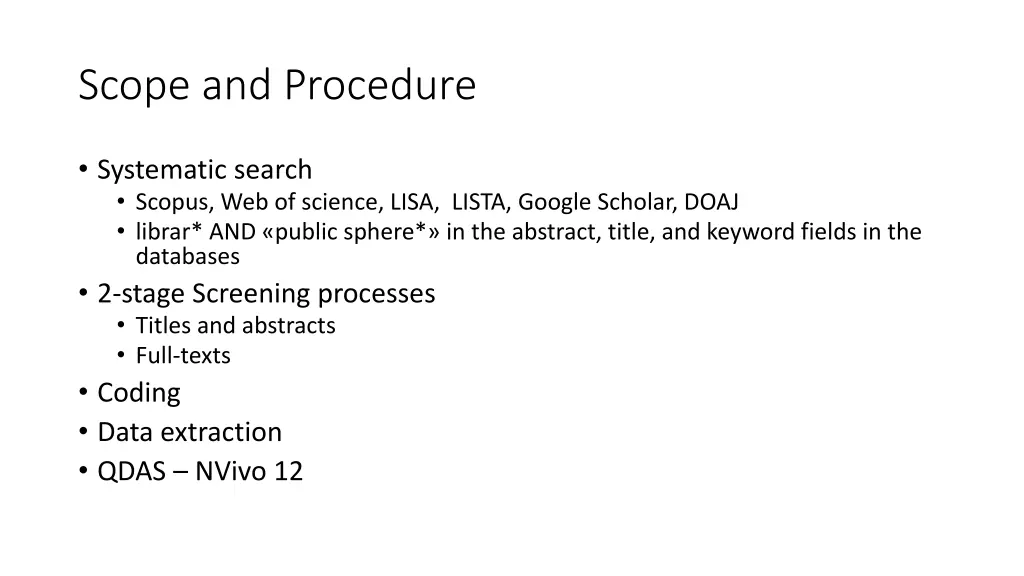
Scope and Procedure Systematic search Scopus, Web of science, LISA, LISTA, Google Scholar, DOAJ librar* AND public sphere* in the abstract, title, and keyword fields in the databases 2-stage Screening processes Titles and abstracts Full-texts Coding Data extraction QDAS NVivo 12
Empirical Theoretical Habermas concept of the public sphere Interview Habermas in combination with other theories Survey Participant observation New conceptual model Document analysis/qualitative content analysis Literature review
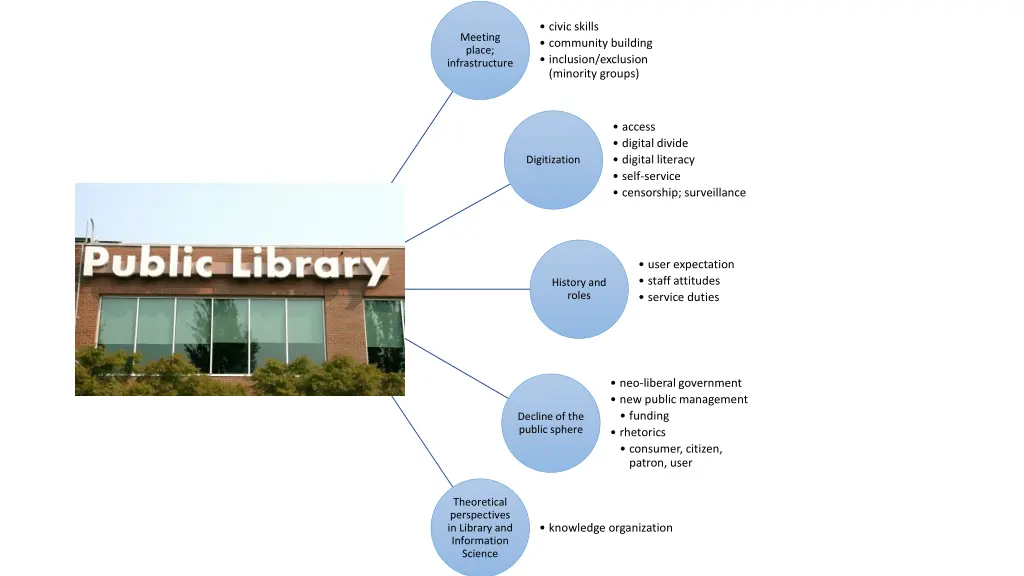
civic skills community building inclusion/exclusion (minority groups) Meeting place; infrastructure access digital divide digital literacy self-service censorship; surveillance Digitization user expectation staff attitudes service duties History and roles neo-liberal government new public management funding rhetorics consumer, citizen, patron, user Decline of the public sphere Theoretical perspectives in Library and Information Science knowledge organization
Research Gaps/Future Research public libraries and the literary public sphere public libraries and the digital public sphere public library s presence on social media relationship between digital and physical meeting places in terms of participation and reaching out to groups usually not using the public library the intersection between private sphere and public sphere in public libraries more case studies to compare findings from different countries and different areas (urban rural; homogeneous heterogeneous)