Learn about the basic aims and measures, vision, and data driving change in healthcare facilities to enhance patient care and outcomes. Explore how structure measures influence lasting improvements in healthcare providers' capacity, systems, and processes.
Please find below an Image/Link to download the presentation.
The content on the website is provided AS IS for your information and personal use only. It may not be sold, licensed, or shared on other websites without obtaining consent from the author. If you encounter any issues during the download, it is possible that the publisher has removed the file from their server.
You are allowed to download the files provided on this website for personal or commercial use, subject to the condition that they are used lawfully. All files are the property of their respective owners.
The content on the website is provided AS IS for your information and personal use only. It may not be sold, licensed, or shared on other websites without obtaining consent from the author.
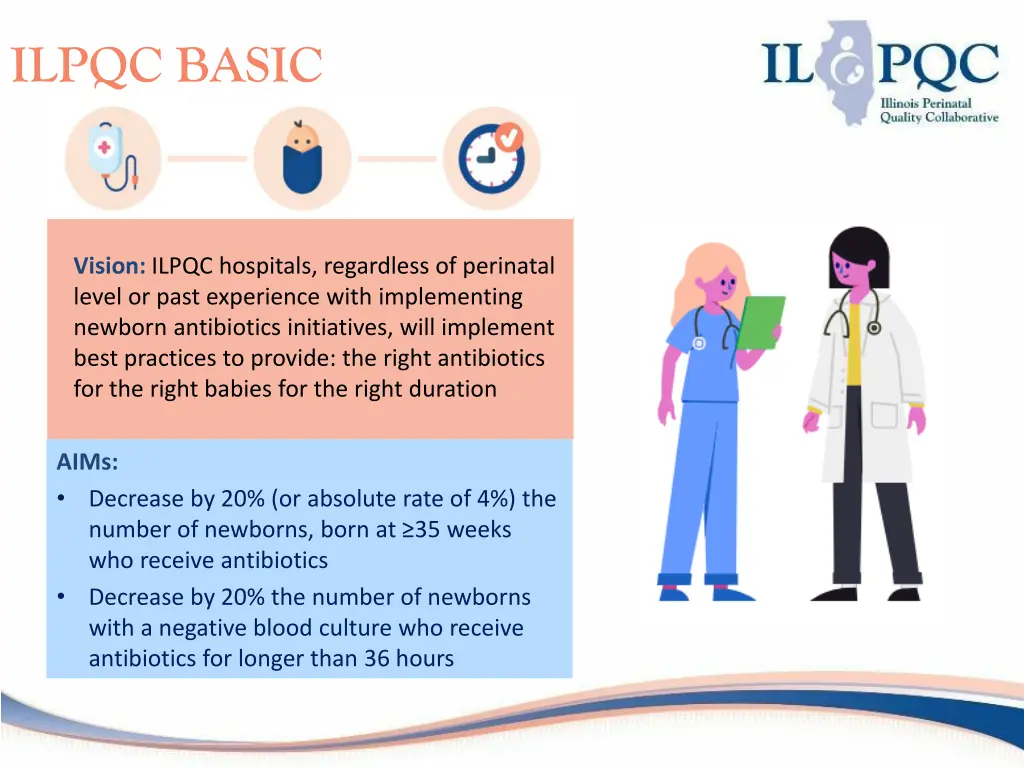
ILPQC BASIC Vision: ILPQC hospitals, regardless of perinatal level or past experience with implementing newborn antibiotics initiatives, will implement best practices to provide: the right antibiotics for the right babies for the right duration AIMs: Decrease by 20% (or absolute rate of 4%) the number of newborns, born at 35 weeks who receive antibiotics Decrease by 20% the number of newborns with a negative blood culture who receive antibiotics for longer than 36 hours
Structure Measures - lead to lasting changes Gives a sense of a health care provider s capacity, systems, and processes to provide high-quality care. For example: Whether the health care organization uses electronic medical records or medication order entry systems The number or proportion of board-certified physicians The ratio of providers to patients 4
Structure Measures Identifying Hospital-Level Measures: Hospital policies, protocols, and educational curriculum for providers, staff, and patients Building a foundation with hospital-level (structure) measures to standardize systems & drive optimal care Planning for sustainability at the onset 5
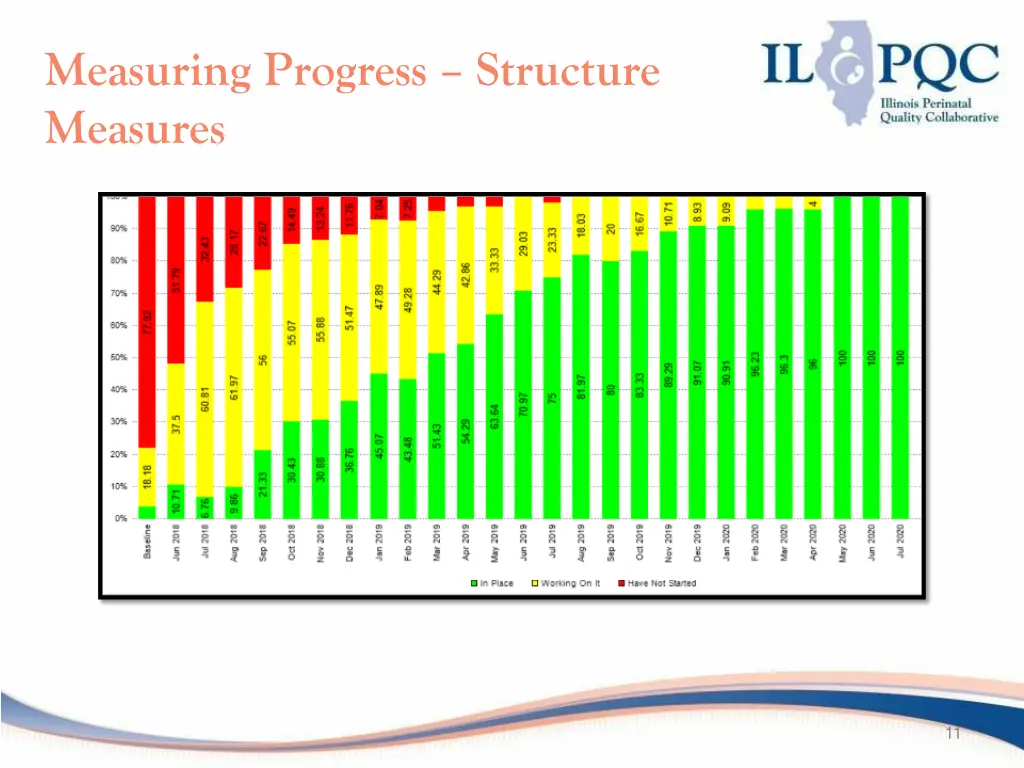
Structure Measures Are the policies and practices in place that are needed to make systems improvements and facilitate culture change improvements? Hospital-level measures tracked monthly on the systems changes a hospital is making on an initiative Report Type: Stacked bar charts 6
Structure Measures Data Monitoring, Transparency, and Stewardship Infrastructure Provider and nurse education on abx stewardship & equitable care Patient education Electronic reporting system in EMR Quality Improvement Strategies to ensure feedback is provided to clinical team 7
Structure Measures Timely and Appropriate Initiation of Antibiotics Standardized risk assessment for early onset sepsis Partnership with obstetric team to standardize communication about maternal risk factors for early onset sepsis Standardized serial assessment of neonates Standardized identification and response to neonates with worsening clinical status 8
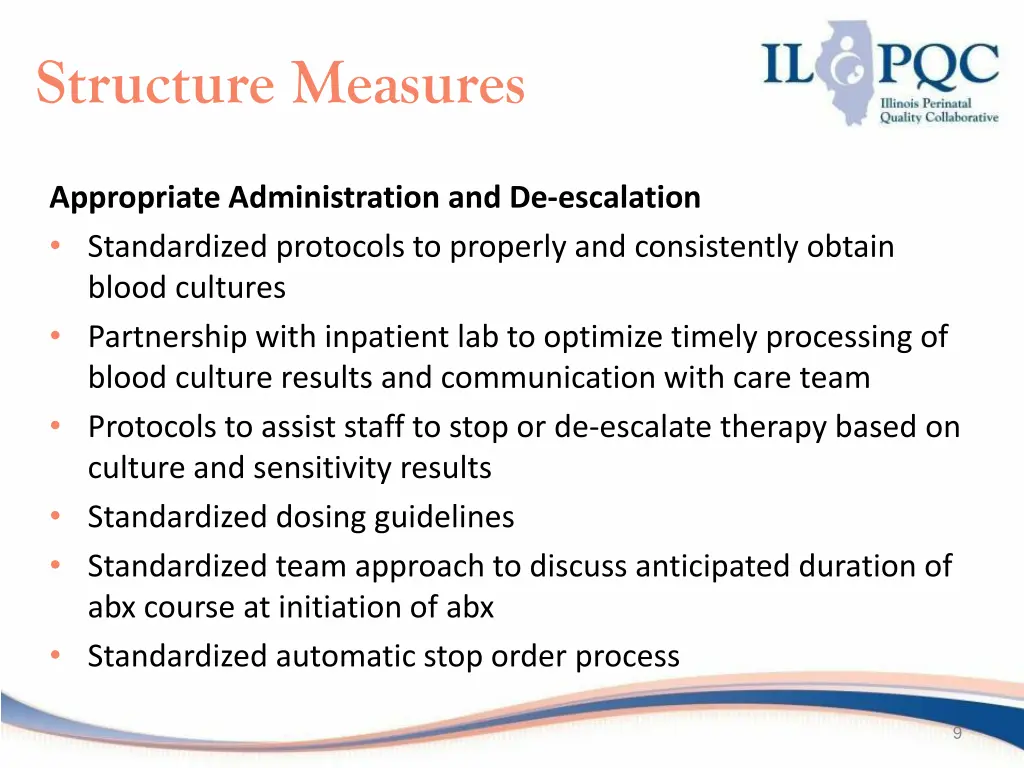
Structure Measures Appropriate Administration and De-escalation Standardized protocols to properly and consistently obtain blood cultures Partnership with inpatient lab to optimize timely processing of blood culture results and communication with care team Protocols to assist staff to stop or de-escalate therapy based on culture and sensitivity results Standardized dosing guidelines Standardized team approach to discuss anticipated duration of abx course at initiation of abx Standardized automatic stop order process 9
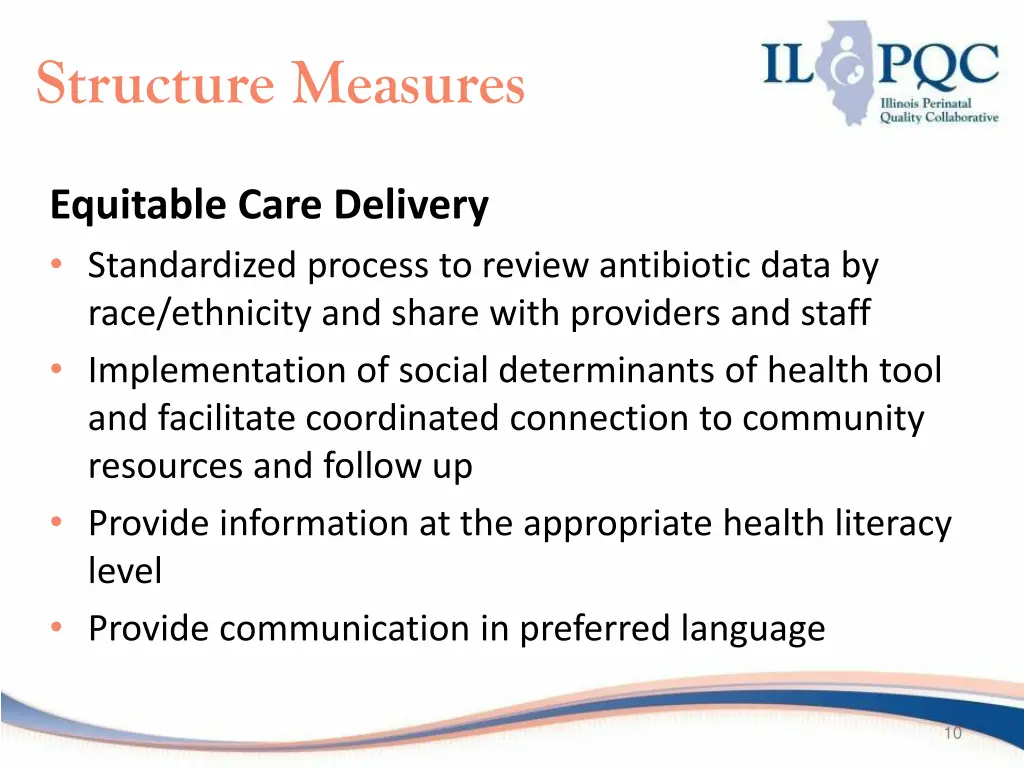
Structure Measures Equitable Care Delivery Standardized process to review antibiotic data by race/ethnicity and share with providers and staff Implementation of social determinants of health tool and facilitate coordinated connection to community resources and follow up Provide information at the appropriate health literacy level Provide communication in preferred language 10
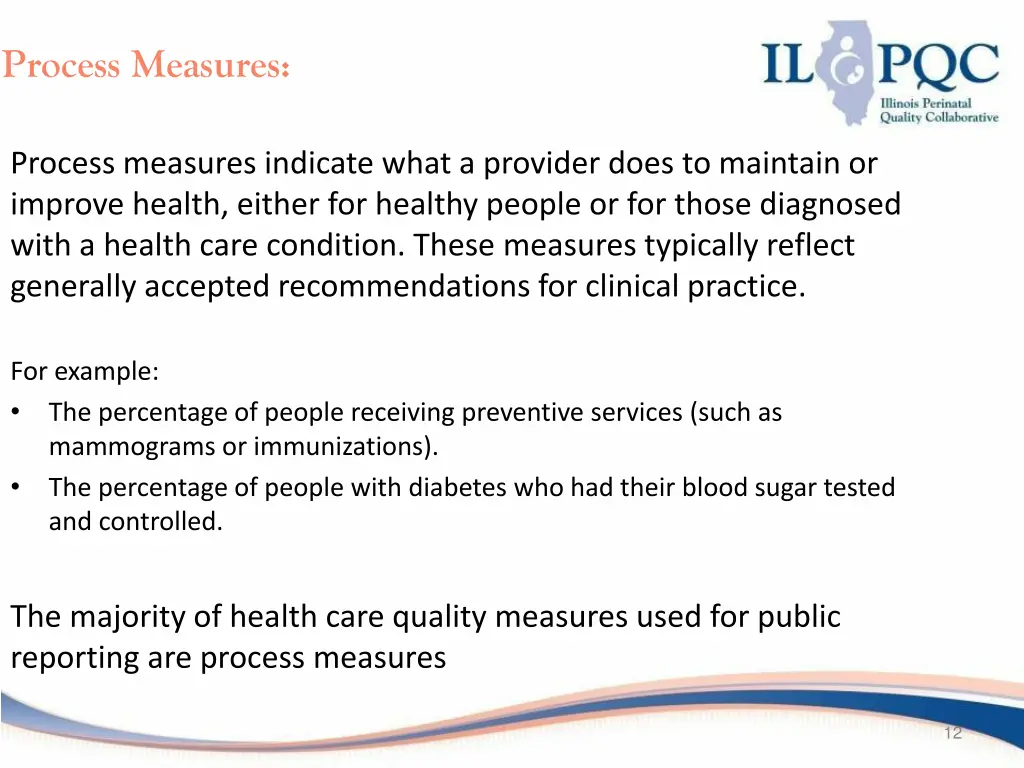
Process Measures: Process measures indicate what a provider does to maintain or improve health, either for healthy people or for those diagnosed with a health care condition. These measures typically reflect generally accepted recommendations for clinical practice. For example: The percentage of people receiving preventive services (such as mammograms or immunizations). The percentage of people with diabetes who had their blood sugar tested and controlled. The majority of health care quality measures used for public reporting are process measures 12
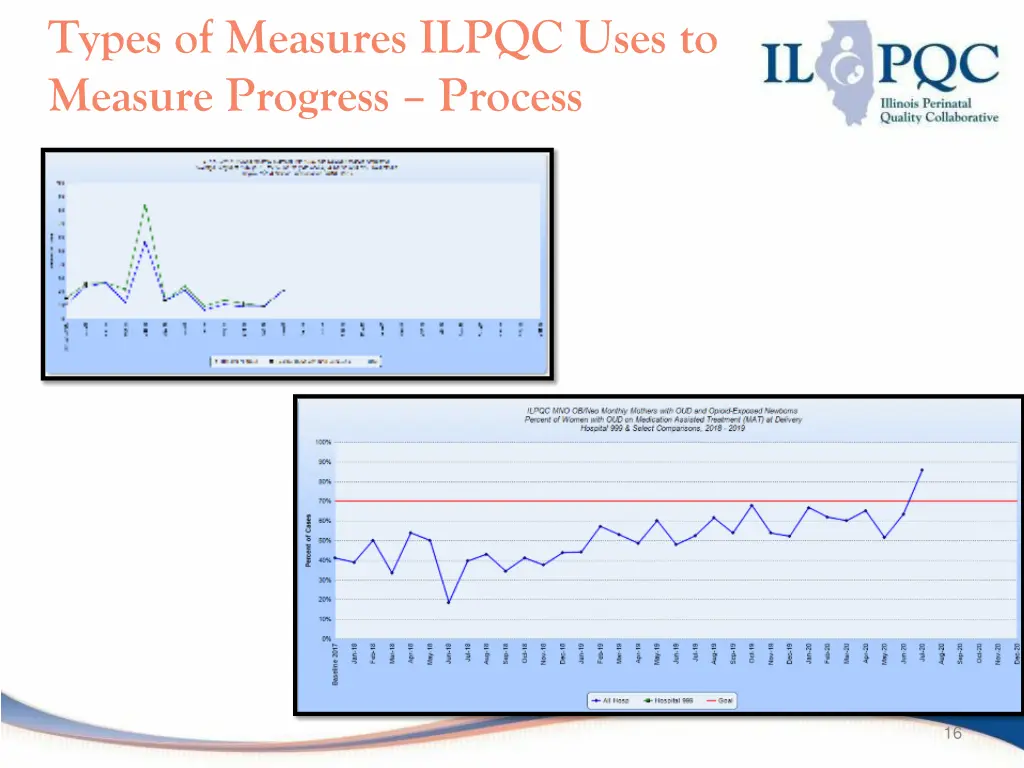
Process Measures Are the parts/steps in the system performing as planned? Are we on track in our efforts to improve the system? Patient-level measures tracked monthly on the clinical culture changes being implemented Report Type: Run Charts 13
Process Measures % of parents/families with newborns who received antibiotics who were provided education on antibiotics, early onset sepsis, and treatment plan for newborn antibiotics and early onset sepsis % of newborns <35 weeks gestation who received antibiotics with a risk assessment algorithm used and documented to evaluate risk of EOS % of newborns 35 weeks gestation who received antibiotics with a risk assessment tool used and documented to evaluate risk for early onset sepsis (EOS) 14
Process Measures % of all newborns who received antibiotics with documentation of maternal risk factors for neonatal EOS in the pediatric medical chart % of all newborns with anticipated duration of antibiotic course discussed by the clinical team at the initiation of antibiotics % of all newborns with an antibiotic automatic stop time order entered into the medical chart 15