Effective Strategies for Online Learning
Explore best practices for online learning, including characteristics of effective teachers, teaching strategies, fostering relationships with students, and classroom management techniques. Learn how to engage students through positive attitudes, meaningful content, and interactive methods to create a safe and engaging virtual learning environment.

Download Presentation

Please find below an Image/Link to download the presentation.
The content on the website is provided AS IS for your information and personal use only. It may not be sold, licensed, or shared on other websites without obtaining consent from the author. If you encounter any issues during the download, it is possible that the publisher has removed the file from their server.
You are allowed to download the files provided on this website for personal or commercial use, subject to the condition that they are used lawfully. All files are the property of their respective owners.
The content on the website is provided AS IS for your information and personal use only. It may not be sold, licensed, or shared on other websites without obtaining consent from the author.
E N D
Presentation Transcript
Online Learning Best Practices Classroom Management Techniques Zoom Information & Session Structure Assessment Training Agenda
BEST PRACTICES FOR ONLINE LEARNING Characteristics of Effective Teachers Teaching Strategies Fostering Relationships and Student Engagement Creating a Safe Space
CHARACTERISTICS OF EFFECTIVE TEACHERS 1. Prepared and organized Review homework submissions Prepare materials Test internet connection Arrive early to your WebEx session 2. Good communication skills Scholars and parents Young scholars may need parental help with technology 3. Knowledgeable about content 1. Provide regular feedback Formal feedback as constructive comments to individual scholars Informal feedback during group setting Good job!
TEACHING STRATEGIES 1. Chunk content Teach material in small segments so learners can process 2. Be aware of learning styles Be able to adapt teaching style to fit the scholars needs when possible such as working in smaller groups 3. Be consistent with classroom structure Consistency and structure will keep scholars on track with learning While flexibility is needed occasionally for individual needs, teaching style should be generally consistent 1. Use multimedia when appropriate PDFs, graphics, video, only if relevant and helpful
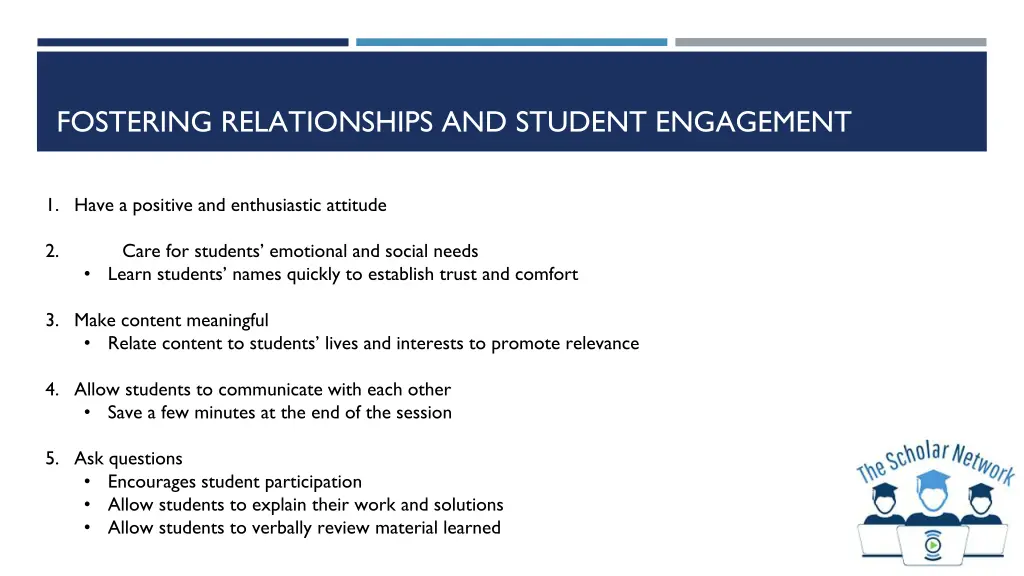
FOSTERING RELATIONSHIPS AND STUDENT ENGAGEMENT 1. Have a positive and enthusiastic attitude 2. Care for students emotional and social needs Learn students names quickly to establish trust and comfort 3. Make content meaningful Relate content to students lives and interests to promote relevance 4. Allow students to communicate with each other Save a few minutes at the end of the session 5. Ask questions Encourages student participation Allow students to explain their work and solutions Allow students to verbally review material learned
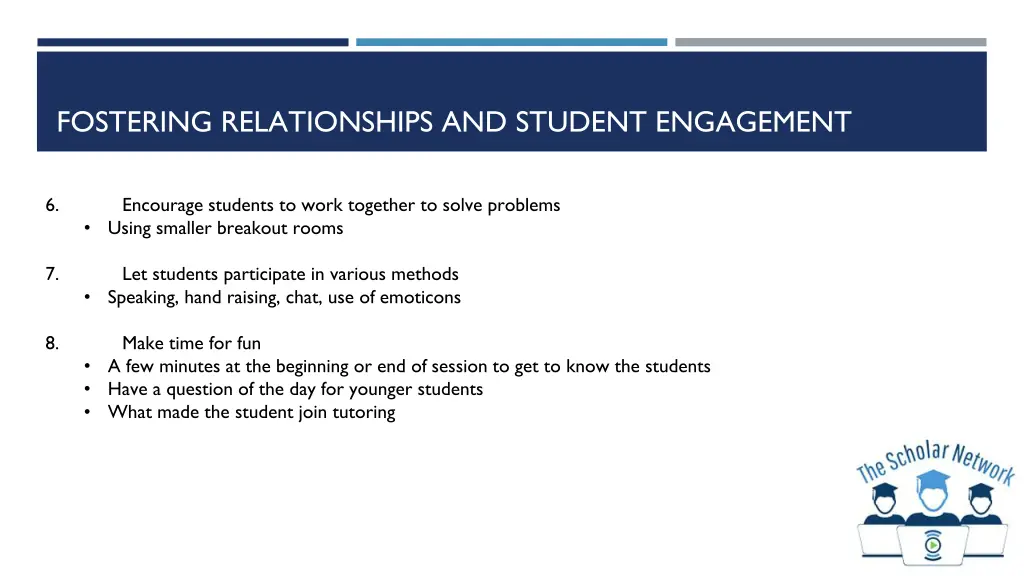
FOSTERING RELATIONSHIPS AND STUDENT ENGAGEMENT 6. Encourage students to work together to solve problems Using smaller breakout rooms 7. Let students participate in various methods Speaking, hand raising, chat, use of emoticons 8. Make time for fun A few minutes at the beginning or end of session to get to know the students Have a question of the day for younger students What made the student join tutoring
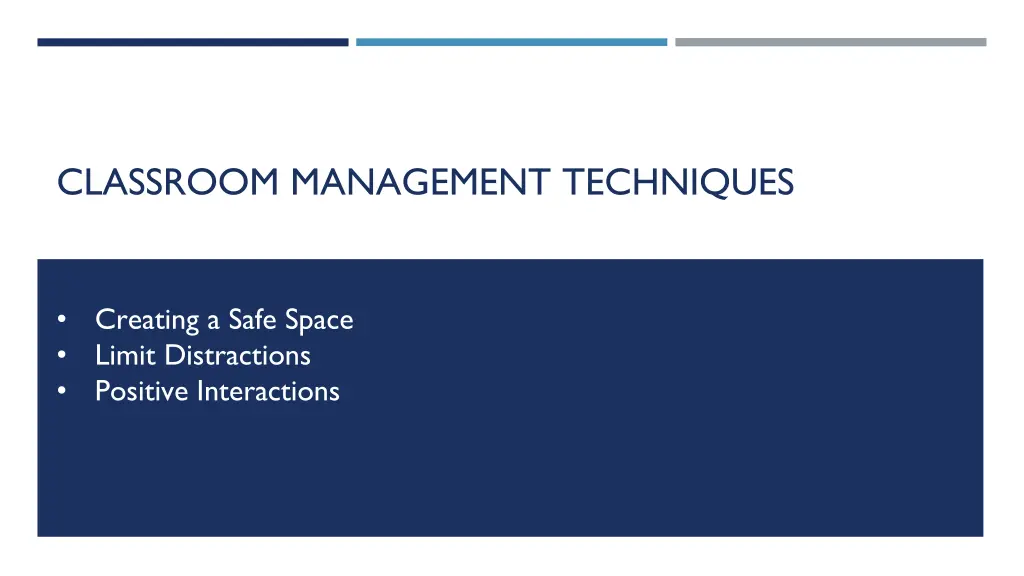
CLASSROOM MANAGEMENT TECHNIQUES Creating a Safe Space Limit Distractions Positive Interactions
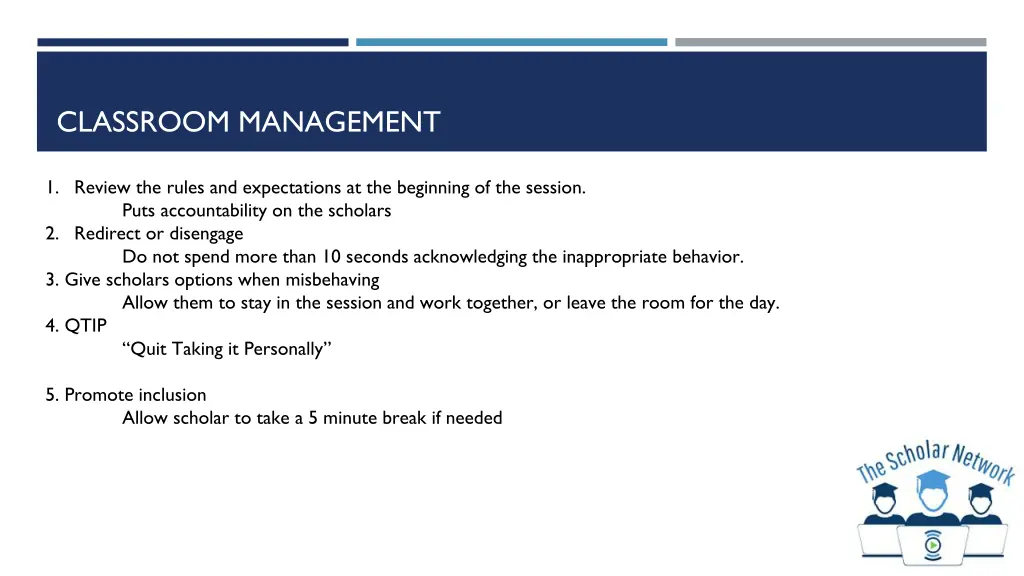
CLASSROOM MANAGEMENT 1. Review the rules and expectations at the beginning of the session. Puts accountability on the scholars 2. Redirect or disengage Do not spend more than 10 seconds acknowledging the inappropriate behavior. 3. Give scholars options when misbehaving Allow them to stay in the session and work together, or leave the room for the day. 4. QTIP Quit Taking it Personally 5. Promote inclusion Allow scholar to take a 5 minute break if needed
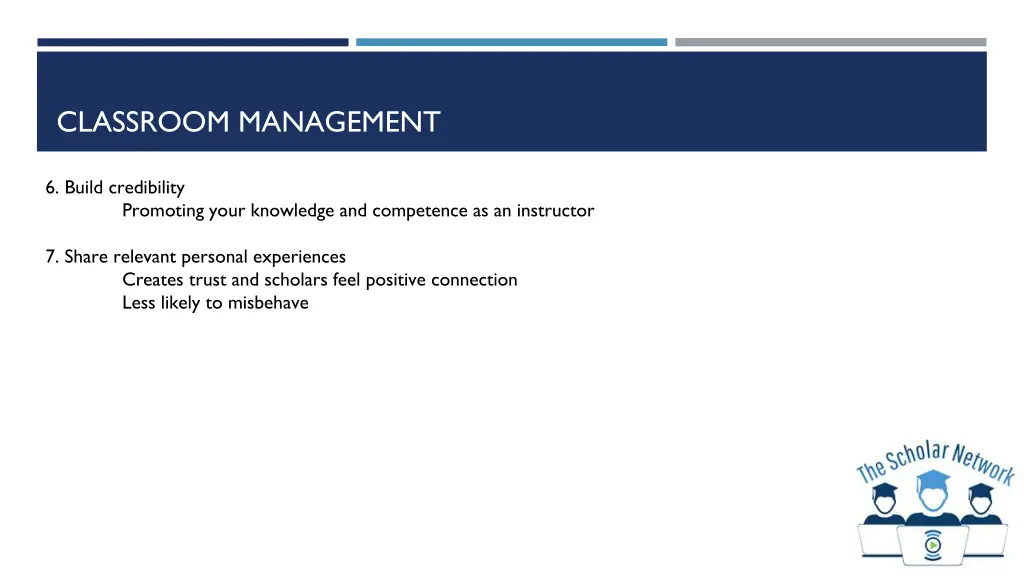
CLASSROOM MANAGEMENT 6. Build credibility Promoting your knowledge and competence as an instructor 7. Share relevant personal experiences Creates trust and scholars feel positive connection Less likely to misbehave
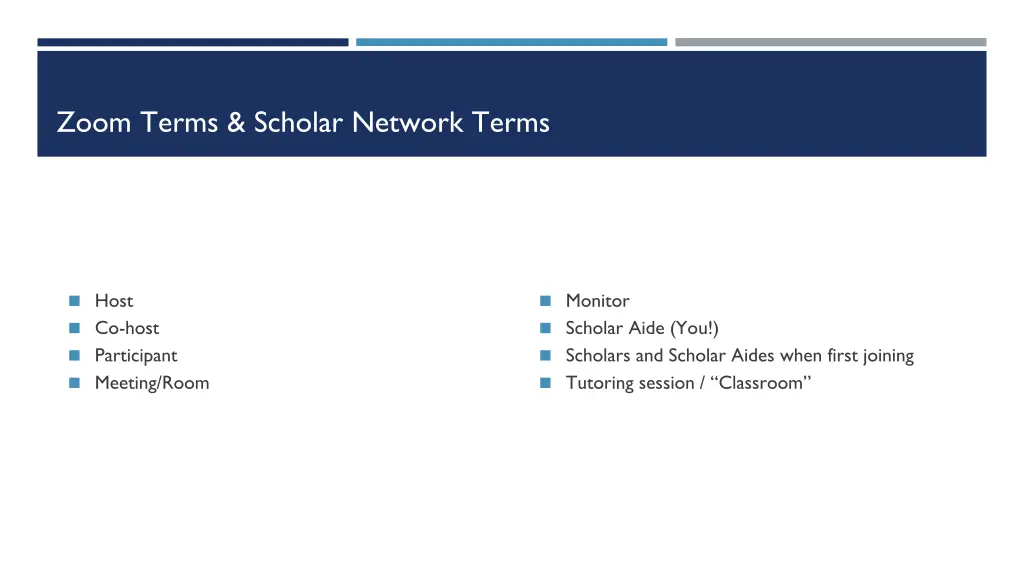
Zoom Terms & Scholar Network Terms Host Co-host Participant Meeting/Room Monitor Scholar Aide (You!) Scholars and Scholar Aides when first joining Tutoring session / Classroom